In this post, I want to share some of the research I have gathered around prominent Palestinian artists. Since my work directly ties to condemning the Palestinian genocide, it is important that I amplify Palestinian voices with my work.
First we have Sliman Mansour, in homage and memory, who recently passed away on August 24, 2026. His art turned the land itself into a language of identity, memory, and resistance creating a powerful reimagining of Palestinian art.
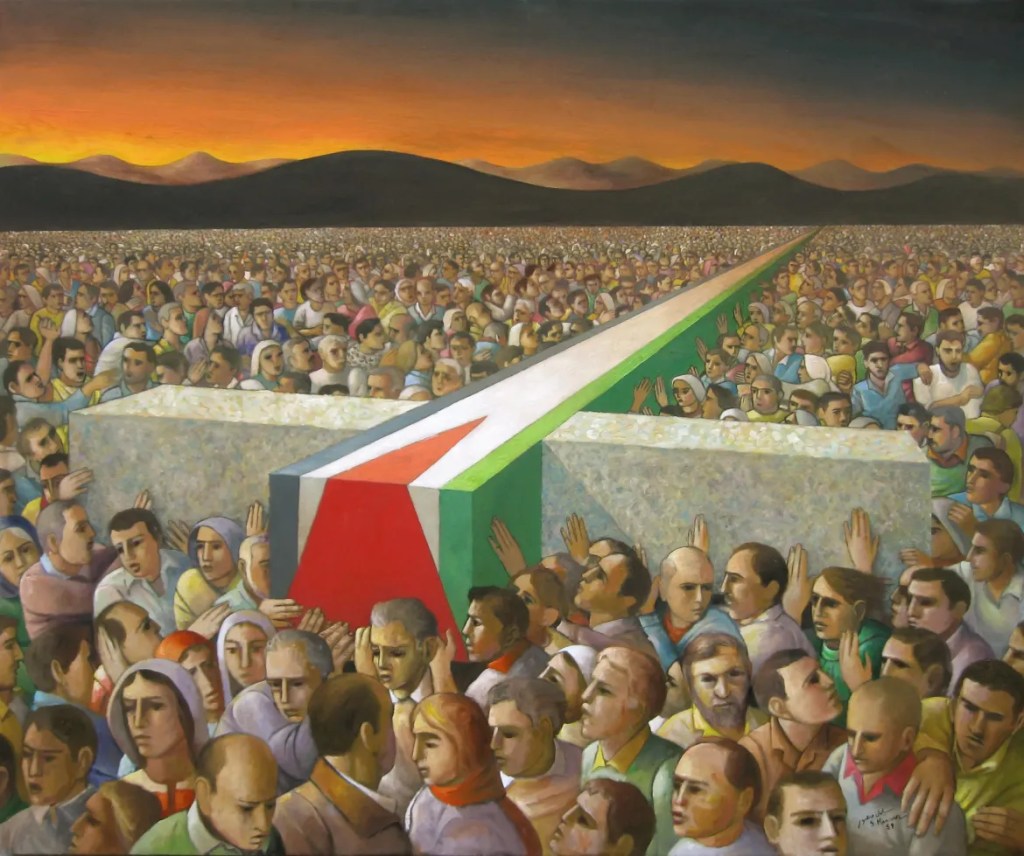
Born near Ramallah, in 1947, Mansour rose to prominence in the 1970s as part of a generation of Palestinian artists, writers and poets seeking to rebuild a identity through symbols rooted in land and memory after the Nakba. He studied art in Beirut and Washington and went on to exhibit extensively, both in solo shows and group international exhibitions.
Because he grew up in a Palestinian village of Birzeit, the local people, peasants, and their way of life became his subject matter. Combined with messages of international resistance, his artwork transformed into a political and national identity. His visual language draws upon the area’s history, Islamic and Arab art, calligraphy and geometric motifs- empowering the Palestinian people and their struggle.
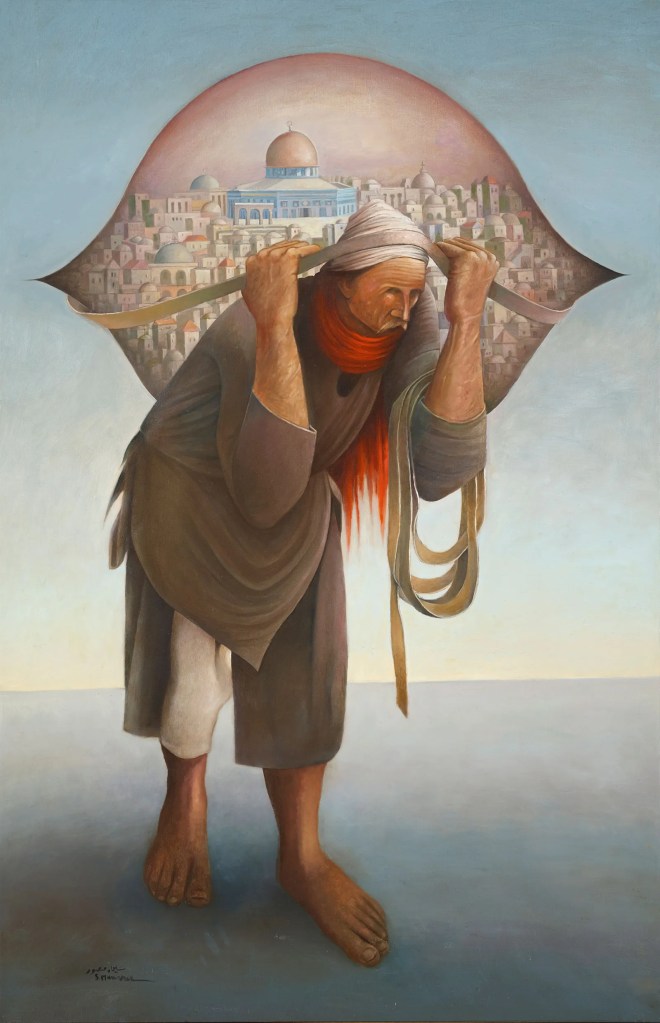
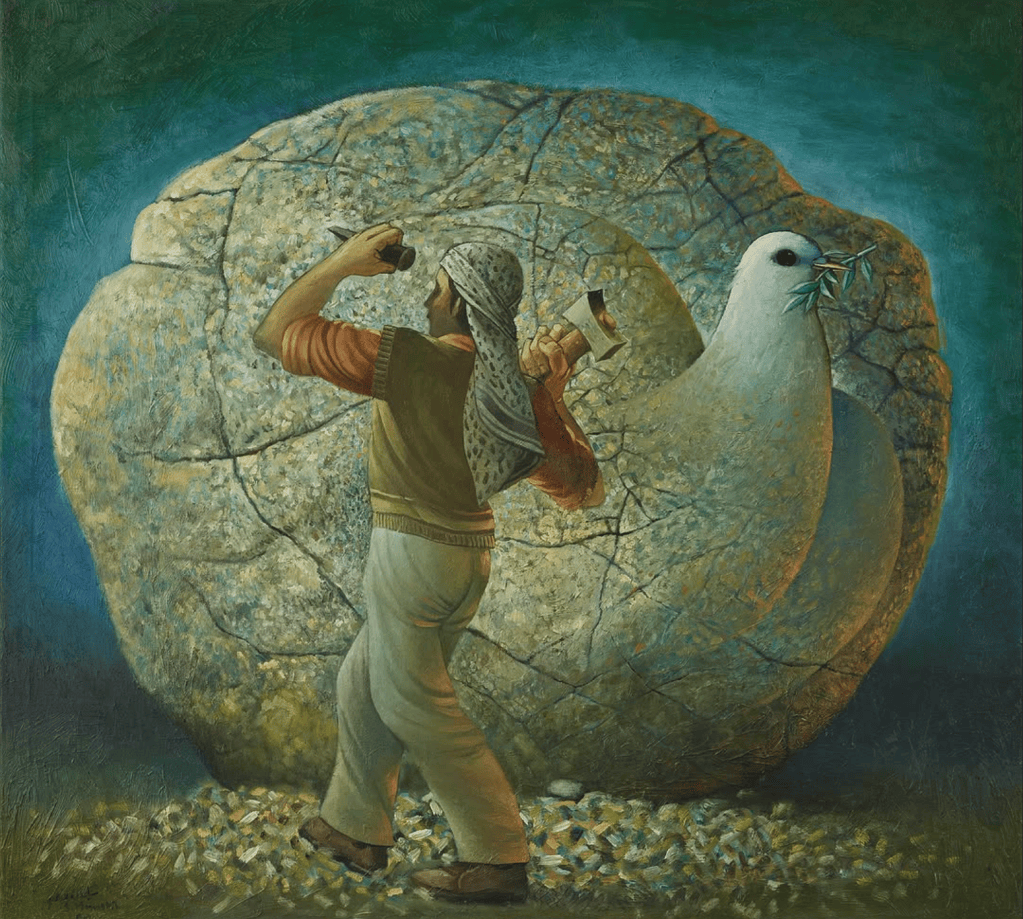
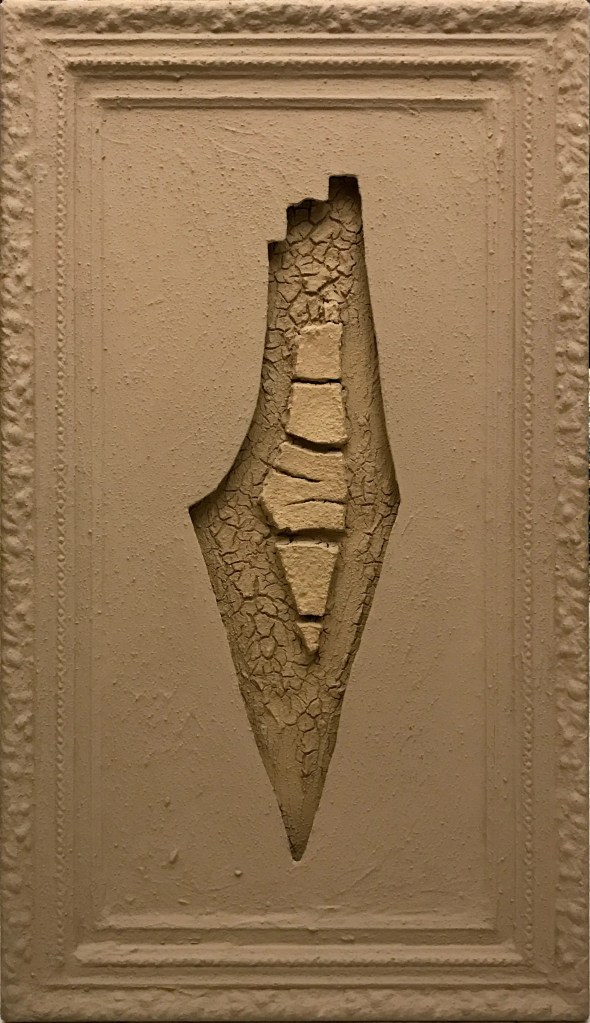
Notably, he used mud, straw, and henna directly in his work for over a decade, using literal earth as material, not just subject. This is could be an interesting connection to reclaimed/land-based materials (salvaged doors, sand, the kraft-paper-as-land ground). However he wasn’t just using the earth as a conceptual idea. During the first Intifada he and his group New Vision turned to materials like mud, straw, wood, leather, henna and natural dyes because he and Palestinian artists boycotted Israeli-made supplies. He said:
“I was moulded by the Palestinian landscape. The land plays an important role in my art and in my nature as a human being. I said to myself, rather than drawing the land, I will draw with land. People would ‘inhale’ my artwork at exhibitions — they would feel the Palestinian heritage, by touch, by scent, with the senses.”
This shift to center the reconnection with the earth, he later said, forged a vital link between post-Nakba art and the work of younger generations. If you’d like to see more of his extensive work, check out these cites:
- Artist’s website: https://slimanmansour.com/
- Instagram page: @sliman.mansour
- Click for Obituary
His figurative style reminds me of Diego Rivera’s work. Likewise the message that art is for the people, and the people are for the land, is a unifying theme, that I also want to continue to explore in my artwork.
Next, we have Hazem Herb, born in Gaza in 1980 and moved to Rome for his MFA. He works as a researcher, collecting archival materials like photographs, negatives and maps! His previous experience is in painting. Collaging with maps allows for discussion on historical and political boundaries that created the situation in Gaza.
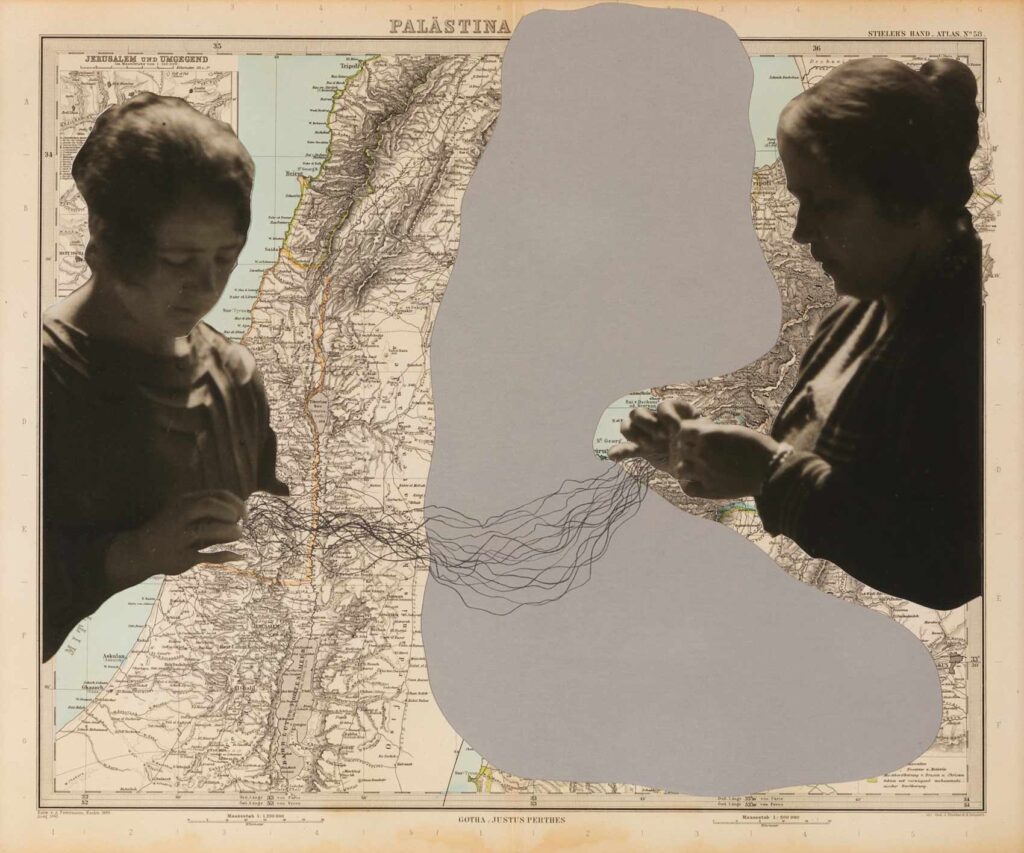
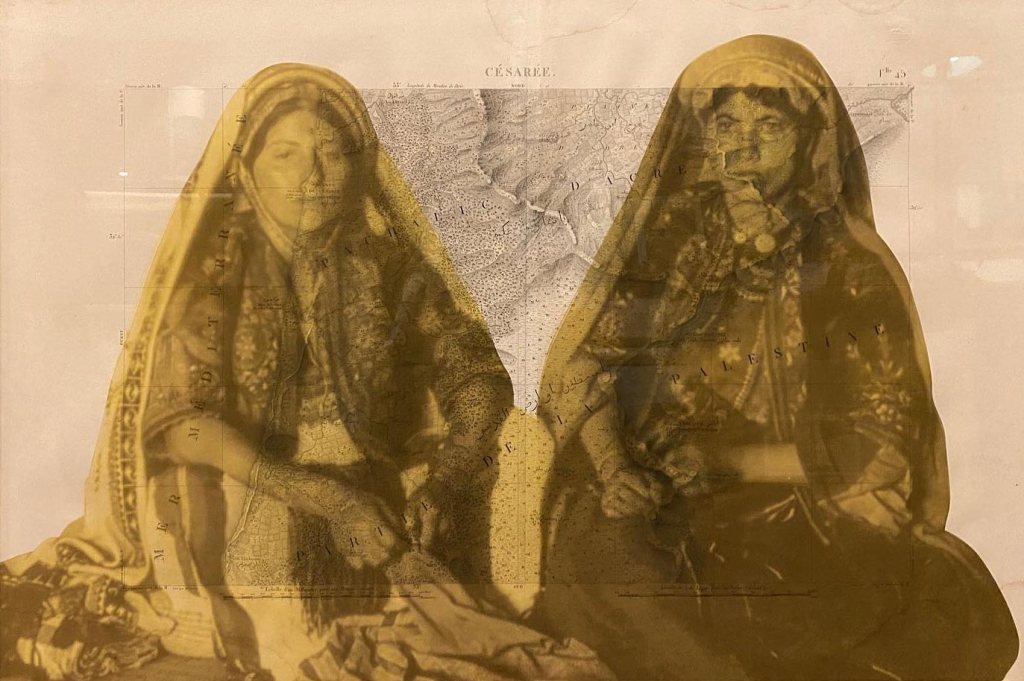
In an interview when asked, what is one thing we can do, he said,
“Amplify Palestinian voices, resist oppression, and use your platforms to advocate for justice.
Keep the conversation alive, stand in solidarity, and act with humanity. Use whatever power and platform you have to show support for the Palestinian people and speak for those who are suppressed.” – Hazem Harb
This interview is a really great resource of him talking about his work. I love the connection to maps and land, as well as archival materials in his work. The interview spoke about his connection with the land, specifically the olive trees and the people. My interest in maps an archival materials are in a similar vein, but with the intention of preserving the history of the causes of these atrocities.
- Also check out his instagram here and his website site here.
Next, there is Samia Halaby (b. 1936, Jerusalem) who is a Palestinian-American painter and pioneer in abstract painting and computer art. Her work is bright, bold, colorful. She draws inspiration from nature and historical movements such as early Islamic architecture and the Soviet avante-garde.
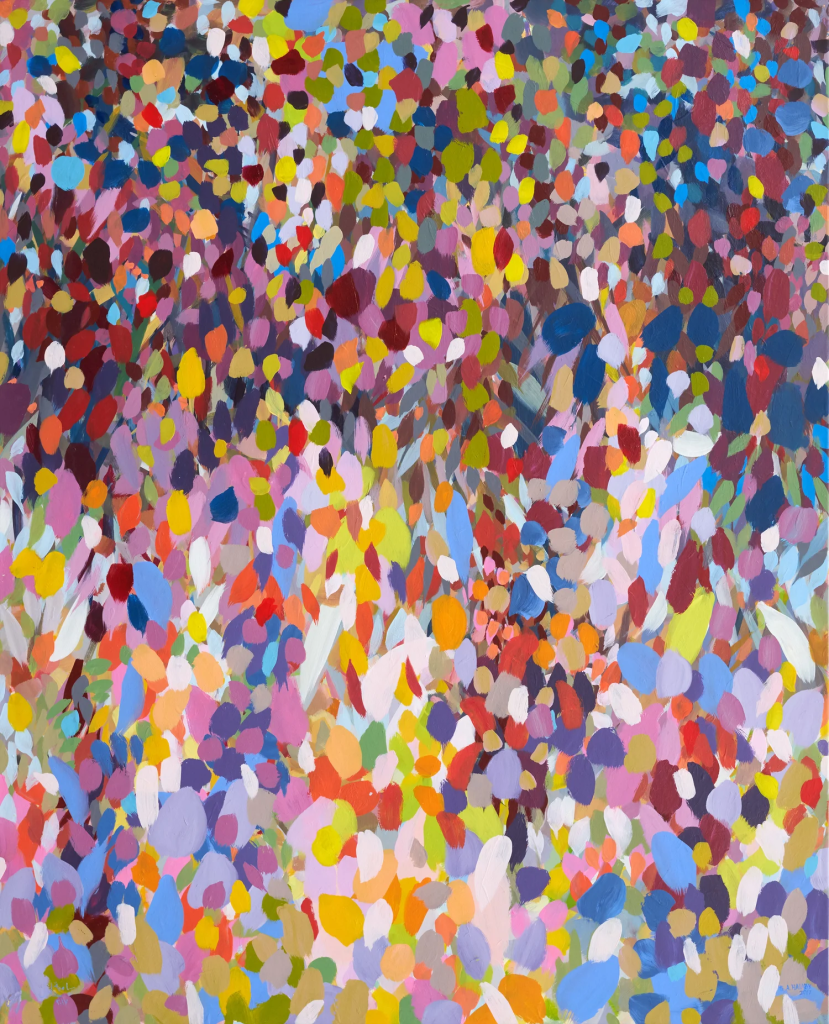
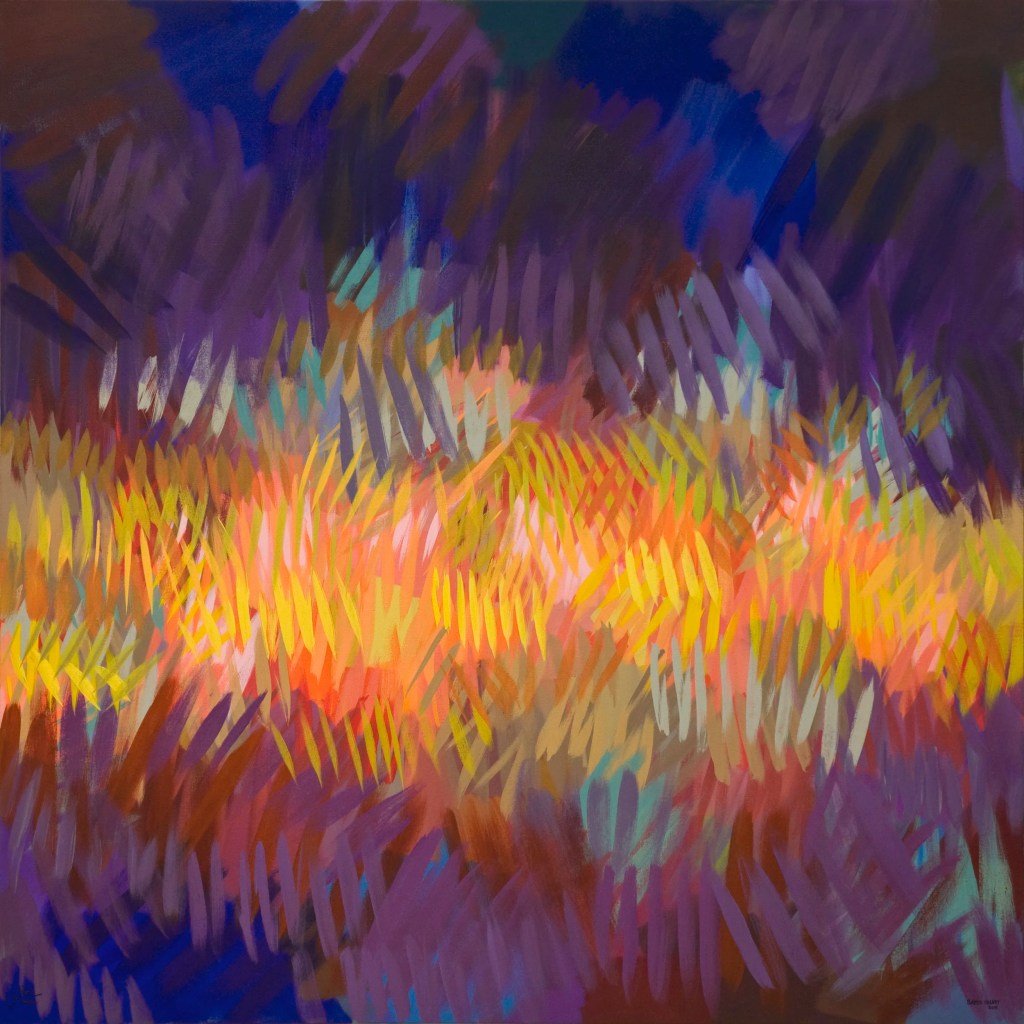
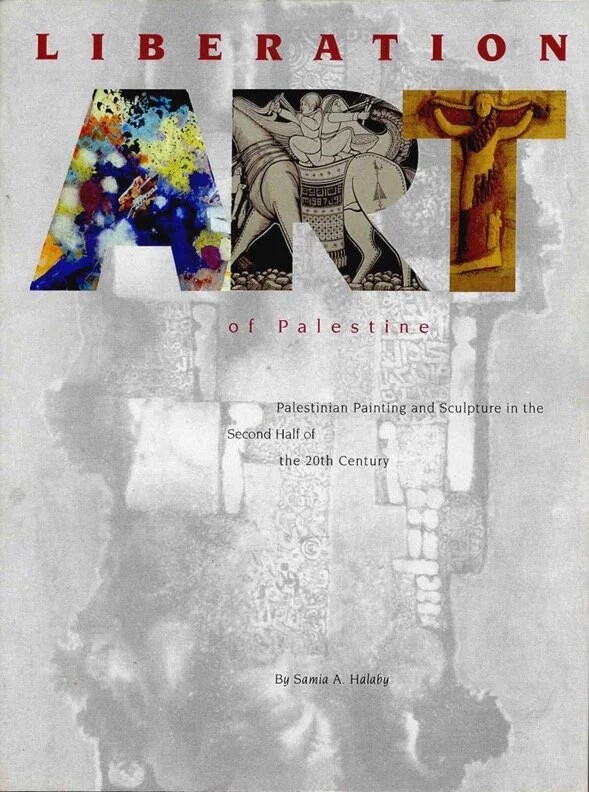
She also is an art historian who curated the landmark “Made in Palestine” exhibition (2003, Station Museum, Houston) — the first US museum exhibition of Palestinian art. She’s also the scholar who classified Mansour within the “Liberation Art Movement,” so her writing (Liberation Art of Palestine) which I now have on my to-read list as a theoretical/historical source.
In 2025 at age 88, she won a Munch award for artistic freedom – despite her celebrated work being cancelled by the US university she studied at, Indiana State and later Michigan State! This is interesting to me in that universities and institutions still have power to their platform to either censor or amplify dissenting voices.
- Click for MoMA Article on her 1997 computer art exhibition.
- Click for Artist’s website
- Click for Palestine Musuem on her work
Finally we have Maliheh Afnan, a painter born in 1935 in Haifa, Palestine, she was exiled to Beirut with her family in 1949 during the Nakba. She received a BA from the American University of Beirut and an MFA just down the road from the Corcoran School of the Arts and Design in Washington, D.C.
What really strikes me about her work is the texture and mark-making.
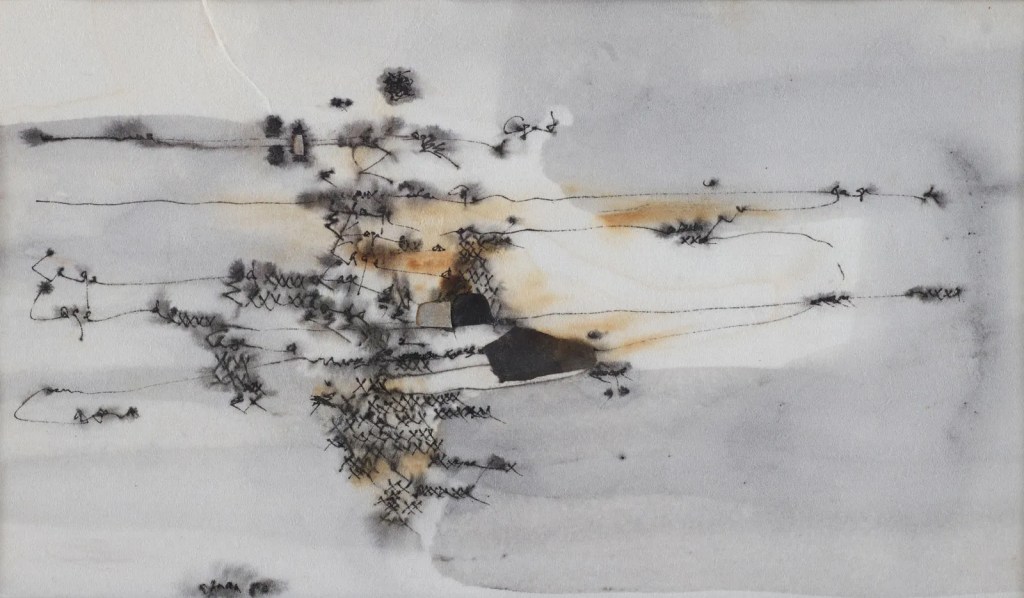
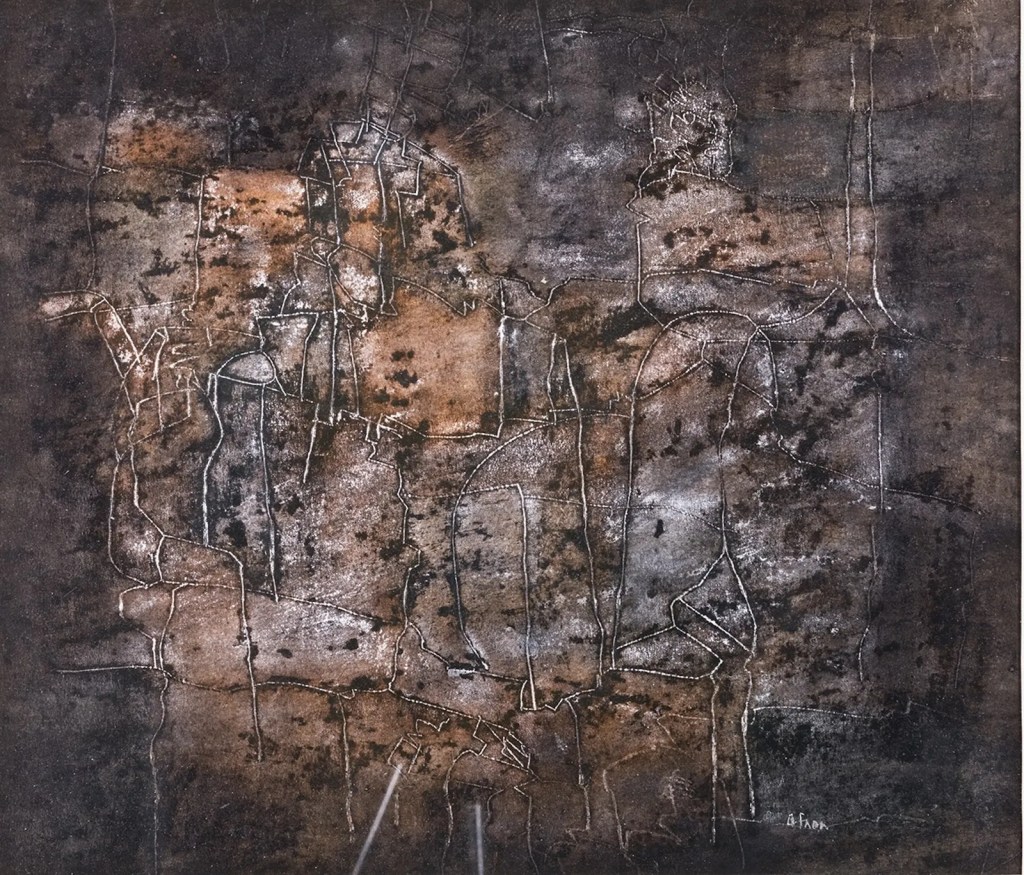
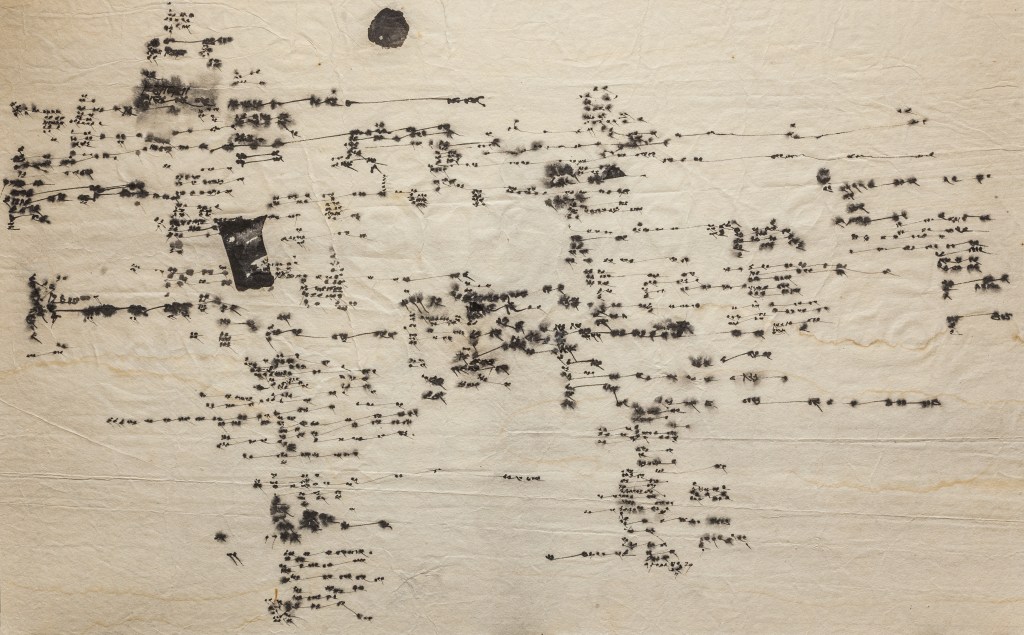
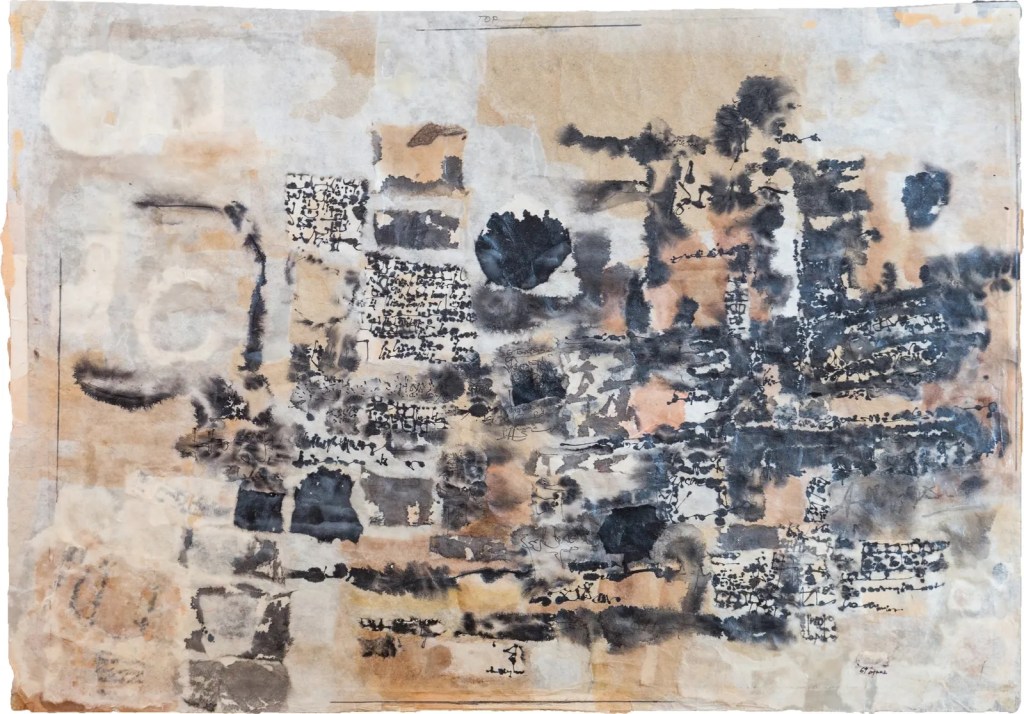
“The notion of memory is a central theme and motive in my work… both in my own and perhaps collective memory. Unconsciously but continually I refer to places, scripts and faces from the past, both real and imagined.
If all of one’s life is registered in the recesses of the unconscious, then one’s work might simply be an unraveling, filtering and transforming of memory through time. Memory is very real.” – Maliheh Afnan
Her artwork deals with memory. It seems her mark-making and use of natural colors alludes to manuscripts, calligraphy, and an ancient forms of language. She references Arab and middle eastern history with abstraction.
Through this research, I stumbled upon Palestine Museum US outside of New Haven, Connecticut! I hope I can travel there soon and learn more. They have a cool campaign where you can sponsor an artwork and have your name stitched into the tapestry. I like the idea selling / sponsoring my final MFA exhibition as donations for Palestine.
Thank you for reading and learning with me! Free Palestine.