This past summer I was able to continue my studies with Professor Wing Yi Tsang at Towson University, exploring Chinese Art history, spanning from neolithic to contemporary art! It was a 5-week whirlwind that I really enjoyed, especially for the opportunity to dive more into Buddhist symbolism and art.
We did a lot of writing, comparing and contrasting how the the cultural, political, religious, and geographical context shaped Chinese art history. Here are some the highlights that I particularly enjoyed. Be sure to read the captions in “gallery mode” to take in the work:
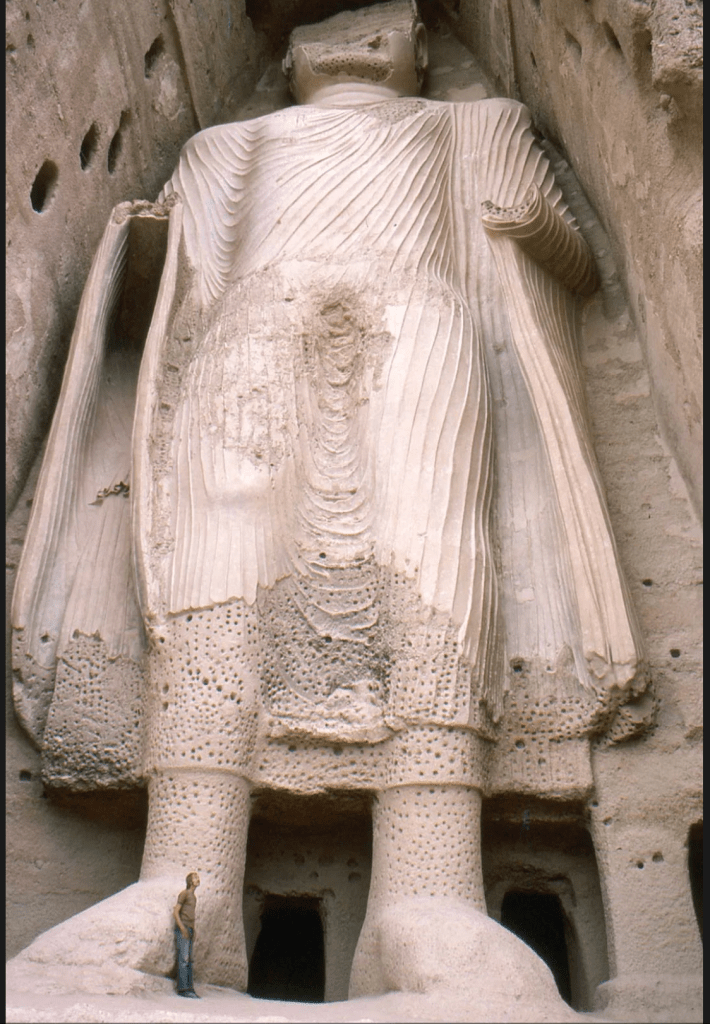
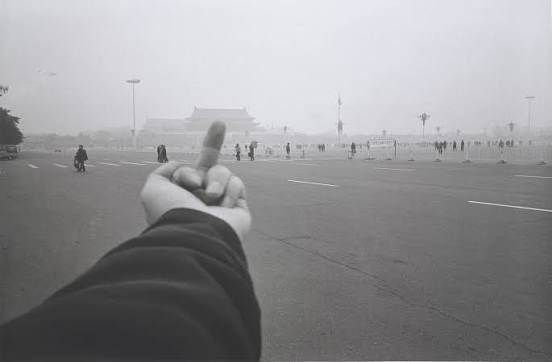
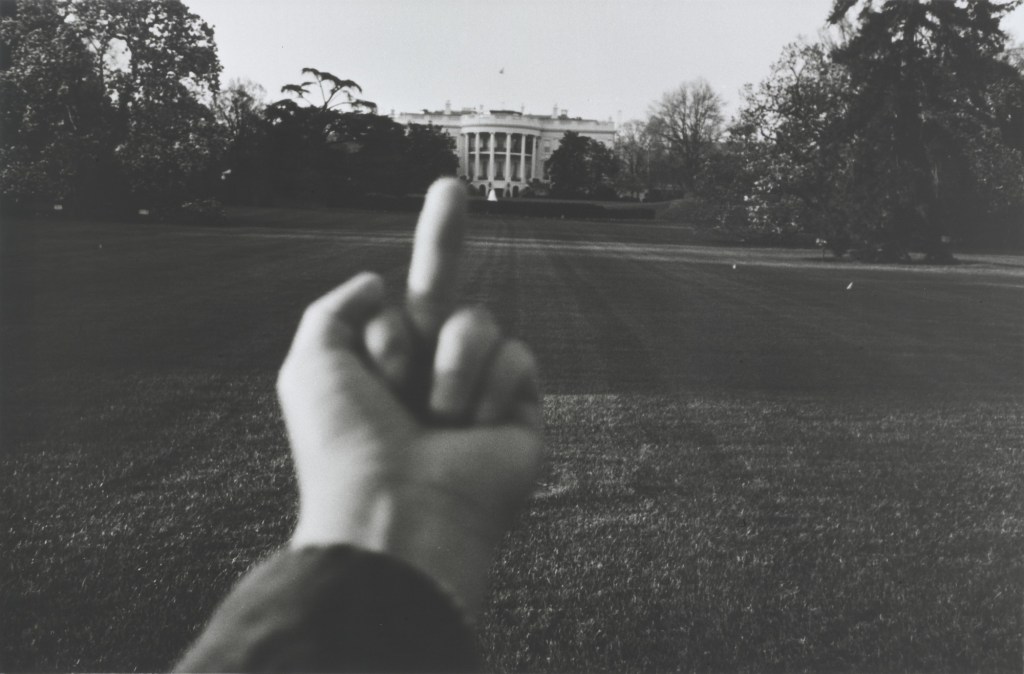
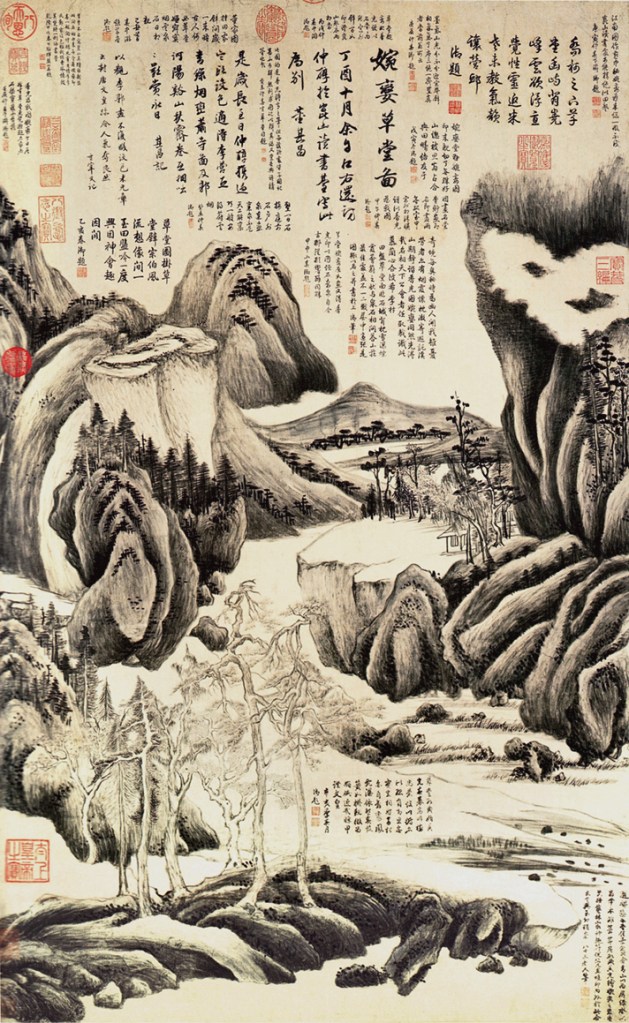
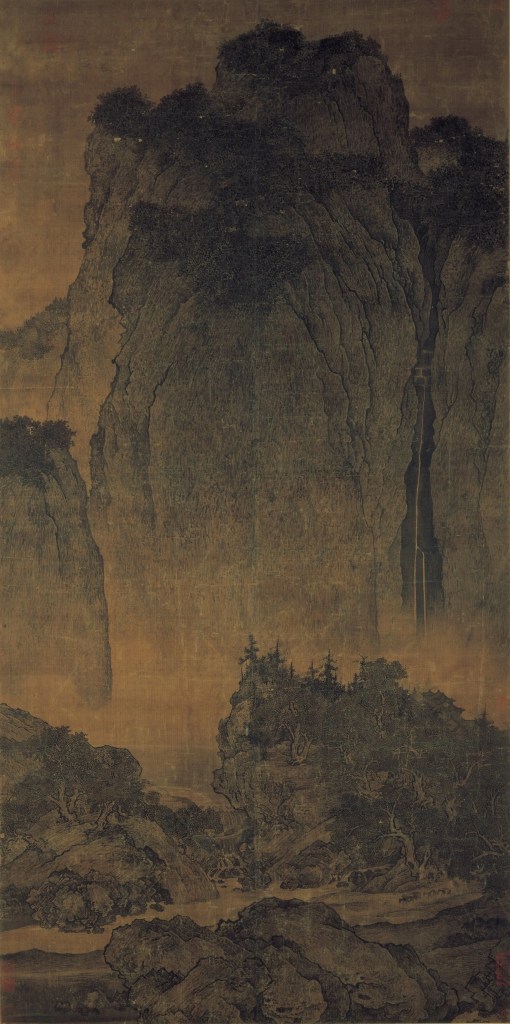
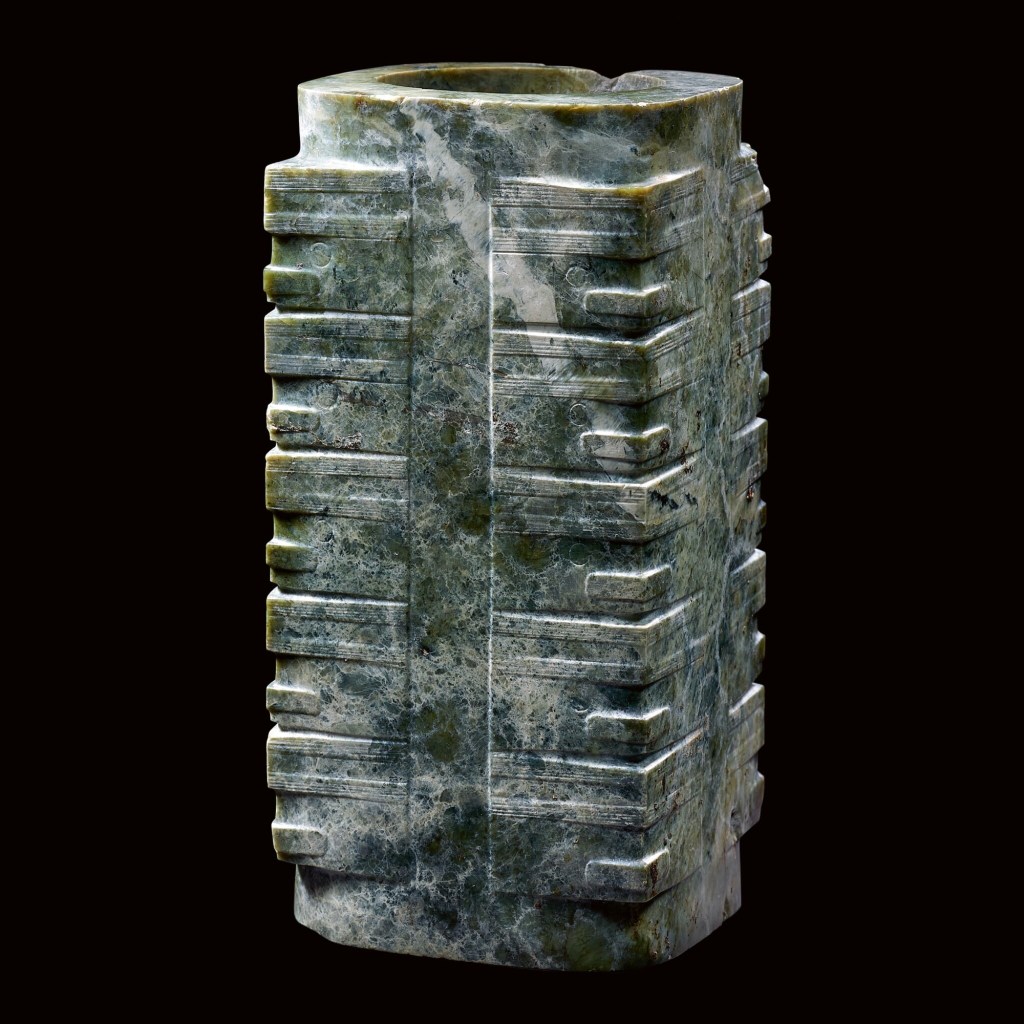
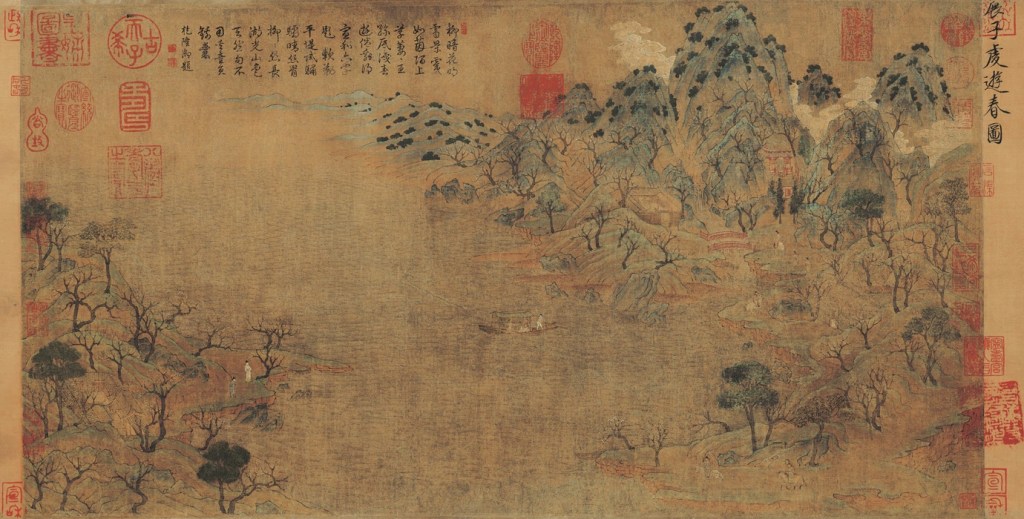
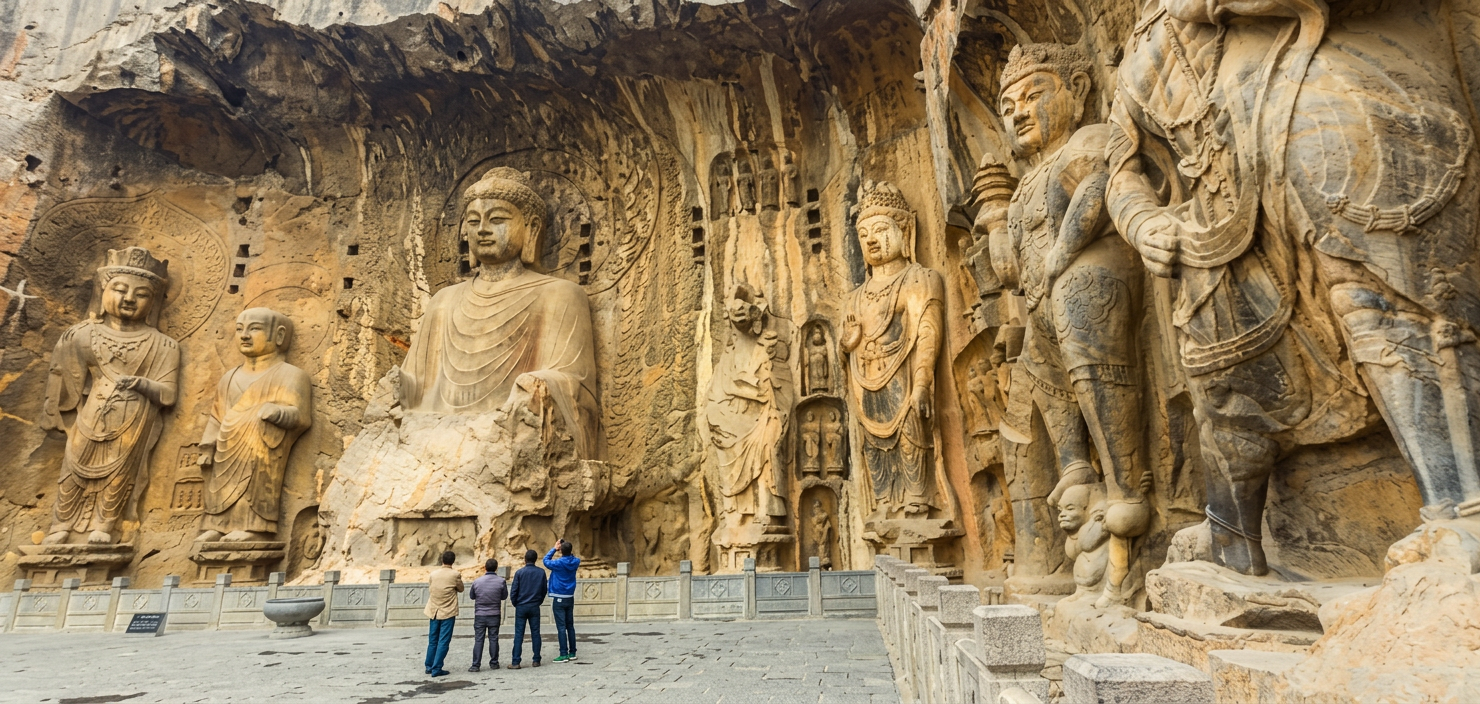
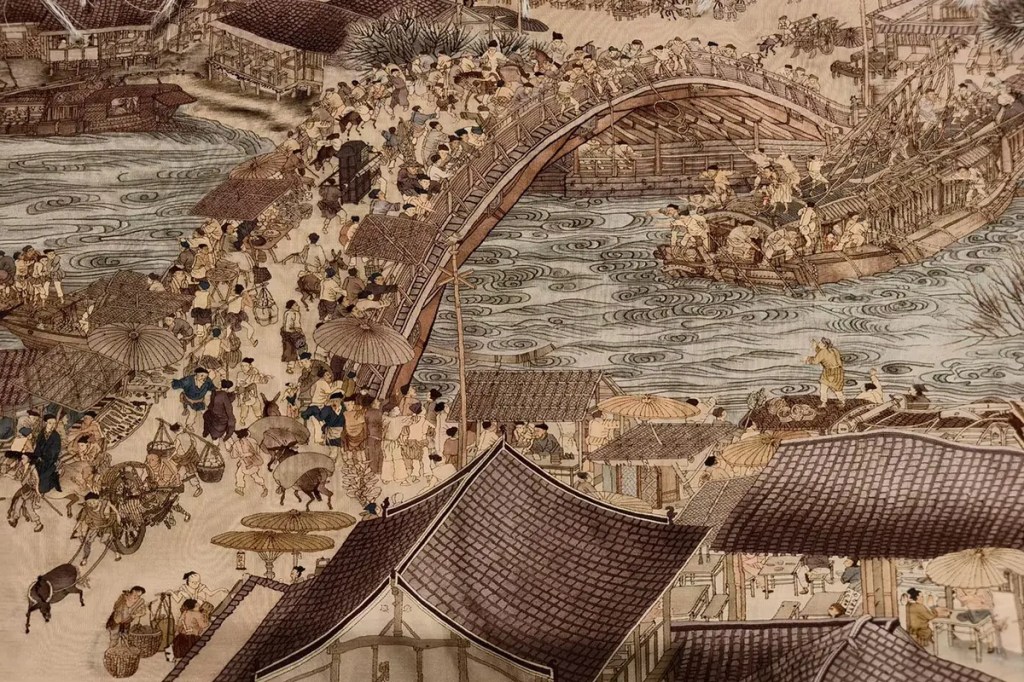
Afghanistan Bamiyan Caves,.Flourished in 4-7th century . Diaries written by Chinese monks Faxian (390/400 CE) and Xuanzang (630-45 CE) which were curical to history during this time Colossal buddhas destroyed in 2001, were one of the great wonders of the world 120-25ft tall, golden ornaments Walls and niches around them painted with Iranian, Central Asian and Indian styles Ropes with covered plaster created drapery folds Not sure whether the buddhas are Shakyamuni or Vairocana Ai Weiwei, Study in Perspective, The Forbidden City. 1995. Gelatin print. By flipping off the Forbidden City and Tiananmen Square, the artists shows distance and depth with his finger – Calling back to depth in Chinese art but creating new political dissent as another layer of meaning Ai Weiwei, Study in Perspective, White House. 1995-2003. Gelatin print. This artwork is originally by Dong Qichang, titled Wanluan Thatched Hall, painted 1597, made during the Ming dynasty. When Qinglong became emperor in 1735, the painting technically became his personal property as ruler. Every time he visited the Wanluan hall, the tomb of his ancestors, he honored the traditional Confucian values of filial piety. While there, he would bring the painting with him and add an inscription directly onto the painting! In total, there are 19 inscriptions. His intention in writing on this work is to create a legacy of his own rulership and history to recognize the legitimacy of his reign. By signing the work, he literally writes himself into history. It also reflects his connoisseurship and mastery of traditional Chinese painting by stamping his seal on it. He was a Northern Song painter, a Daoist, and said to be austere, shy. He shunned the world and lived as a recluse in mountains. This painting is considered a masterpiece because it established the ideal in monumental painting that others would revisit later. In the work, we see the dominance of mountains as the main theme. Its composition is very vertical with the mountain taking up most of the space. At the very bottom, we see small shrubs with tiny humans and donkeys on the right, and on top of the mountain on the right, there is a Buddhist temple, representing Buddhist monks practicing in nature. The artwork presents ideas about the cosmos as a complex, hierarchical scale with nature being like an emperor running its subjects. It shows the value of humans existing in harmonious relationships with nature as the natural social order of the world. Cong (pronounced SONG), Liangzhu Culture, (c. 3300–2300 BCE).Found in funerary sites , they are large rectuagular tubse with ciruclar inner sections and asquare outter region . The drawings on the outside depicts faces or masks – perhaps connection to later funerary masks? Also found with Bi – a round circle with a hole in the middle, thought to represents heaven ,Zhan Ziqian (展子虔, fl. late 6th c.), Sui Dynasty (581–618). Spring Excursion, Ink and colors on silk, 43 x 80.5 cm, The Palace Museum, Beijing. Vairochana in Cave 1280 of Longmen Caves Colossal buddha , generative force of cosmos. Finished with empress Wu Zetian;s; patronage and made in her resemblance. Required 26 years to carve . Fullness of Buddha’s face is typical of late 7-8th century Chinese art. 56 feet high , with two bodhisattvas to the side and 4 guardians Along the River During the Qingming Festival, made by Zhang Zeduan in the 12th century during the Song Dynasty. The Qingming Scroll is a hand-scroll painting on silk that represents city life in Northern Song celebrating the festival, “Tomb sweeping day” in which citizens honored their ancestors by preparing food, wine, and make offerings at their tombs as an act of filial piety. This scroll is historically significant for multiple reasons. Technically, it was revolutionary because Zeduan used a new drawing technique called Ruled-line painting. This approach allowed for extreme precision and clarity when rendering architecture in painting by using a ruler as a tool to guide the brush, creating accurate and realistic cityscape as seen in the artwork. Likewise, the linework within the 16-foot handscroll is very high-contrast with bold outlines, which creates an easy-to-continuous narrative for the reader. Additionally, the artist used foreshortening in the rendering of the boats and architecture to create a sense of space and 3D depth. Historically it is also iconic given that the landmarks in the urban scene are not a literal representations of the city of Kaifeng, but rather an imaginal idealized city. The city streets are very peaceful and stable, there is no poverty, no sickness, no crime, and everyone is very happy. There are no guards at the city gates, some even are seen taking naps. The mystery around the idealization of the urban landscape continues to inspire and invoke the curiosity of art historians to this day.
A major thread across these works is the intersection of politics and religion. Imperial support of the Buddhist religion and the arts led to a flowering of caves, temples, objects, paintings and murals. Political violence ripples through artworks from Mao’s Cultural Revolution to the bombing of the Bamiyan Buddhas. Religions is not separate from politics. It’s helpful to see again in art history as I consider the interaction of my own Buddhist spiritual practice and political meaning in my thesis work.
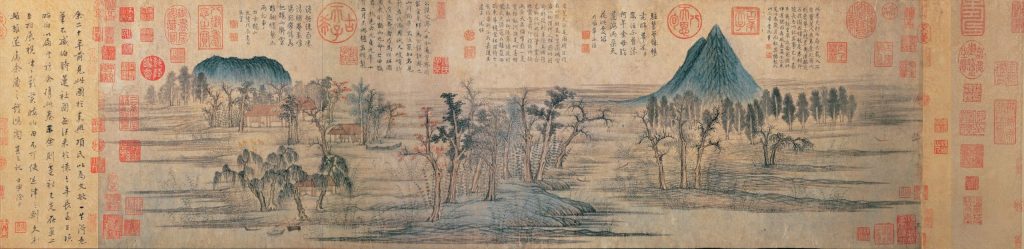
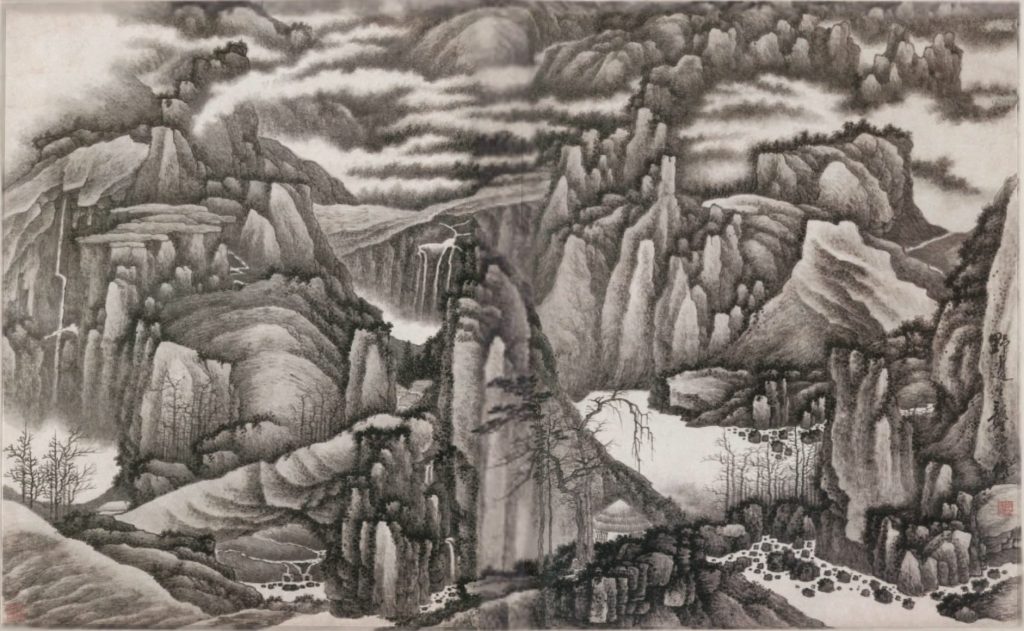
Zhao Mengfu (1254–1322), Autumn Colors on the Que and Hua Mountains, 1295, handscroll (detail), ink and colors on paper, 28.4 x 93.2 cm. Revived and reinterpreted classical styles with spontaneous expression – an emphasis on history, and cultural and artistic heritage as a state of mind the literati achieved through absorbing, combining, and reinterpreting previous styles and traditions, specifically of the Tang dynasty and blue-and-green landscape painting.Gong Xian, A Thousand Peaks and Myriad Ravines, 1679. The artist actively resisted Ming rule; h e lost all his hope and lived in reclusion, supporting himself with painting. This work reveals his inner mood of hopelessness, darkness, mourning, like a prison, desperation, despair
Another key takeaway was the prominence of landscape in Chinese art history. The beauty and spiritual meaning of landscapes show up with techniques like expressive ink brushwork on silk and paper, scale and composition, horizontal and vertical scroll formatting, and later linear perspective and ruler painting. Landscapes feature a central role in my work – the land and our relationship to it is central to our understanding of our humanity and spirituality.
Our final project was to pick an Chinese artwork not listed in the curriculum and give a presentation on the artwork. Given that the semester started with early Asian artwork, and how Buddhism shaped Chinese art and culture, I thought it would be cool to explore other Buddhist artworks later in the Chinese history. While I was doing preliminary brainstorming scrolling through photos, and an image caught my eye – until I realized that Chappell and I had seen the work in person!
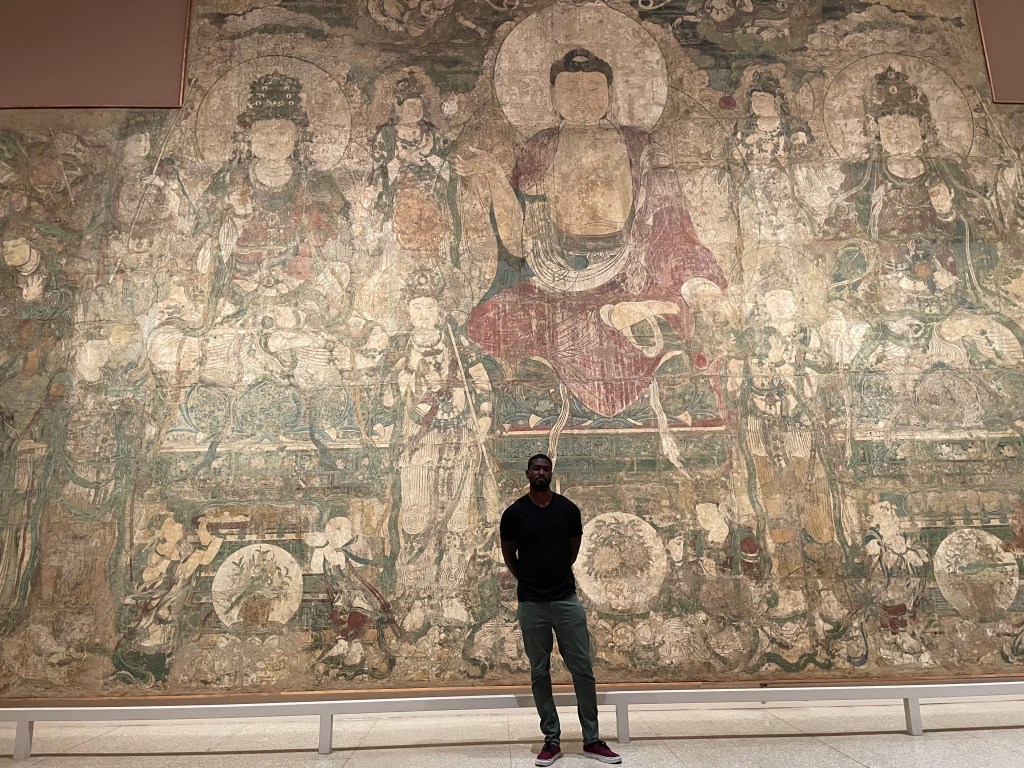
Below as the video thumbnail is a picture of my partner, Chappell, standing in front of the mural, Buddha of Medicine Bhaishajyaguru (Yaoshi fo). Originally painted in the Guangsheng monastery complex in 1319, it now resides at the Metropolitan Museum of Art in New York, where we visited it on July 12, 2022. At the time, I had no idea how important it was or how it would contribute to my studies of Chinese art history 4 years later. The mural was painted on dry plaster mixed with straw and covered with clay, painted with mineral and vegetal pigments. The mural is massive, measuring 24 feet 8 inches tall and 49 feet 7 inches wide. Here is my final video presentation:
Along the way of the course, I also discovered the visual artist Tuan Andrew Nguyen recently finished and installed a monumental sculpture, “The Light That Shines Through the Universe,” to explore the Bamiyan Buddha’s memory, history, and the enduring impact of conflict and violence. He is using stone and shrapnel and artillery brass from Vietnam and the Taliban’s bombing into Buddhist mudras (hand gestures) for a sculpture in NYC.
Here is the link to a short video describing his work:
This all personally resonates with me because I am a practicing Buddhist and am in the TU Master of Fine Art program, exploring political and Buddhist artwork in my thesis. Fall Semester started this week!! I’m excited to incorporate my learning into my work. Thanks for reading – and especially for watching!