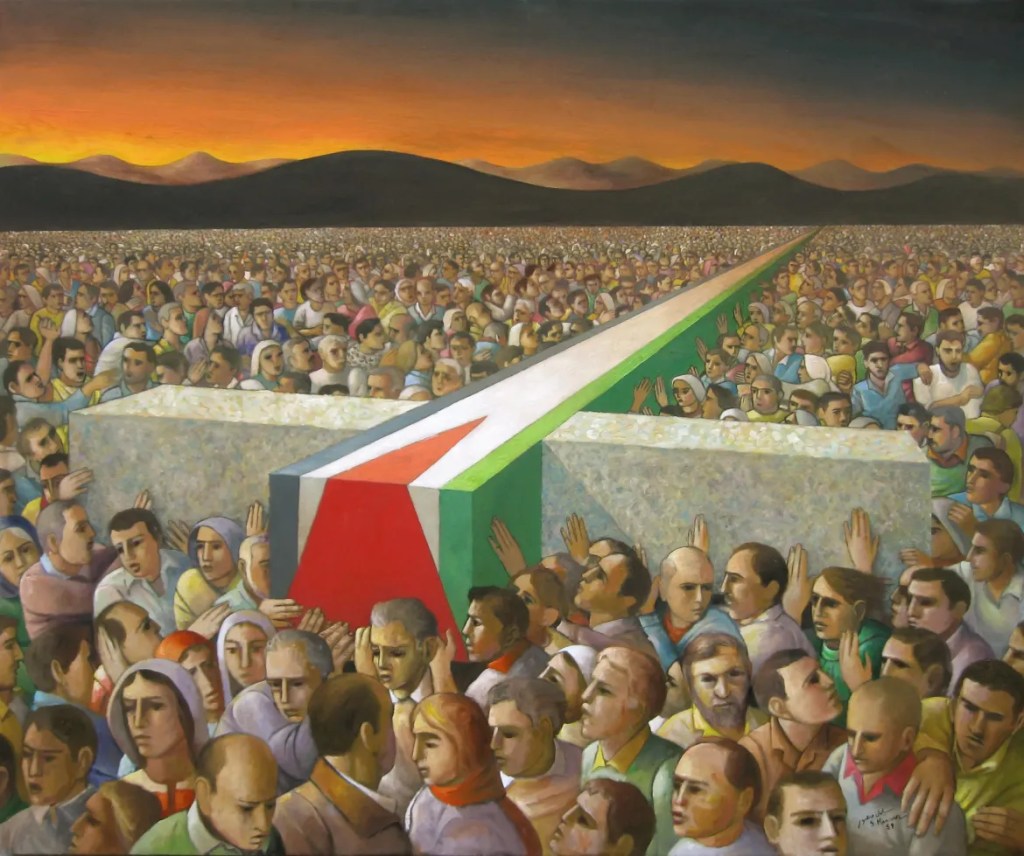
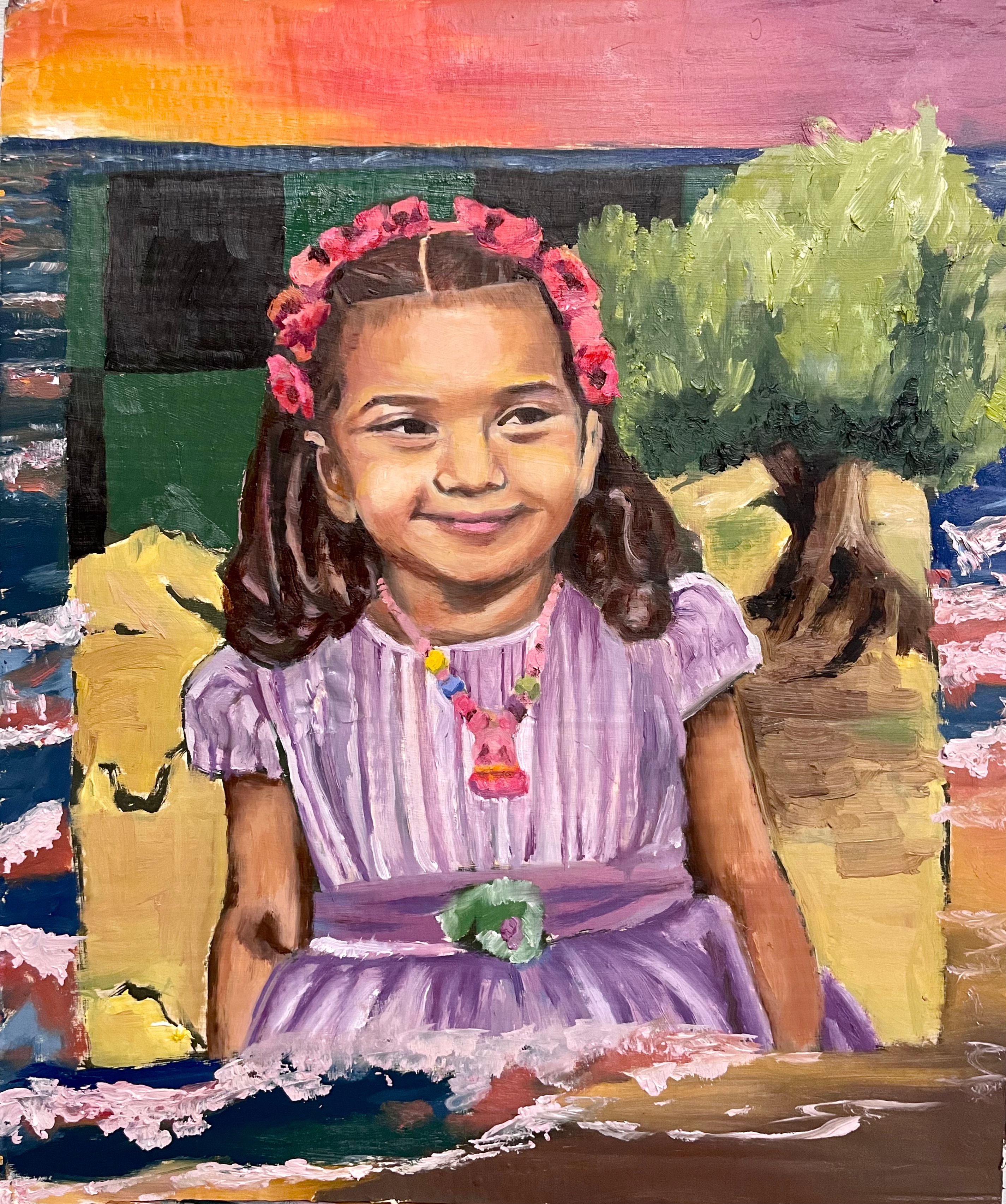
This past spring semester at Towson, my work remained focused on my relationship to the ongoing Palestinian genocide, using my platform and privilege to challenge personal and institutional complicity in what we are witnessing.
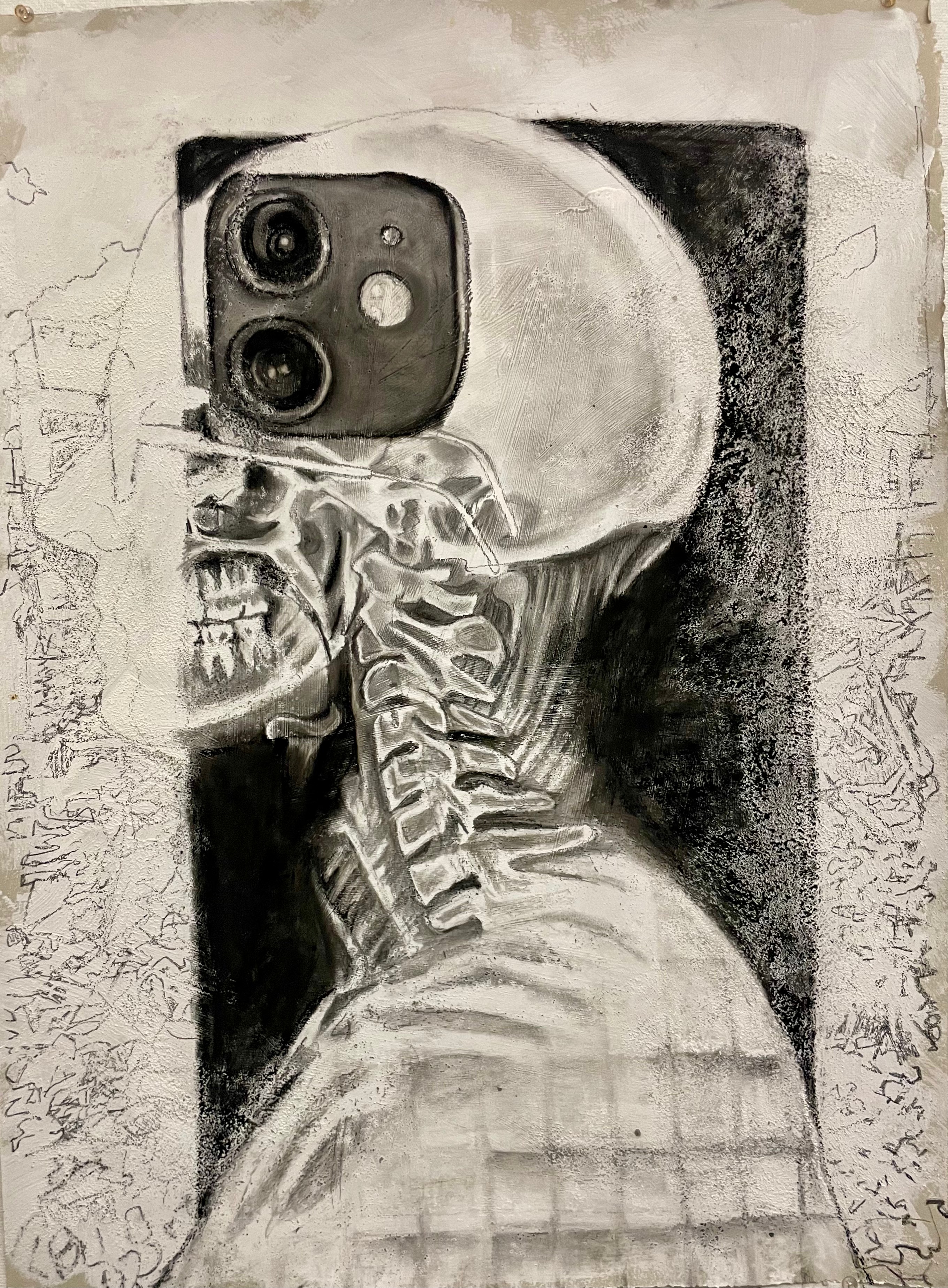
Recognizing that the body is a landscape, I included x-ray scans within the rubble that geopolitical and racial violence has on the earth through embedding my work and figures within surreal landscapes. The depth of space in landscapes allows me to continue to explore the way abstraction and realism collide, and the way they create meaning for the viewer. In Thru the Phone, this flattening of space asks us to consider where we stand in relationship to seeing the destruction in Gaza.
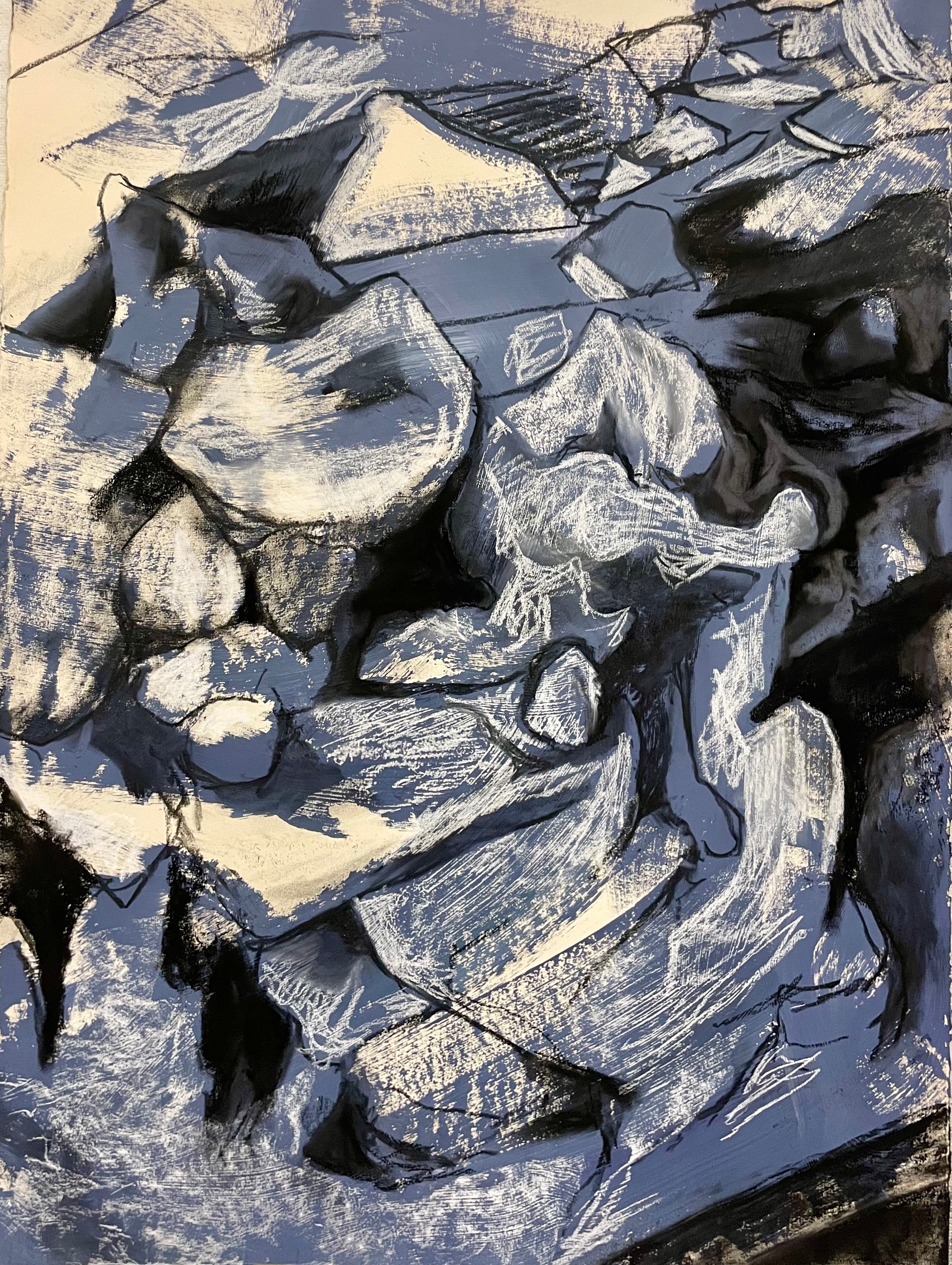
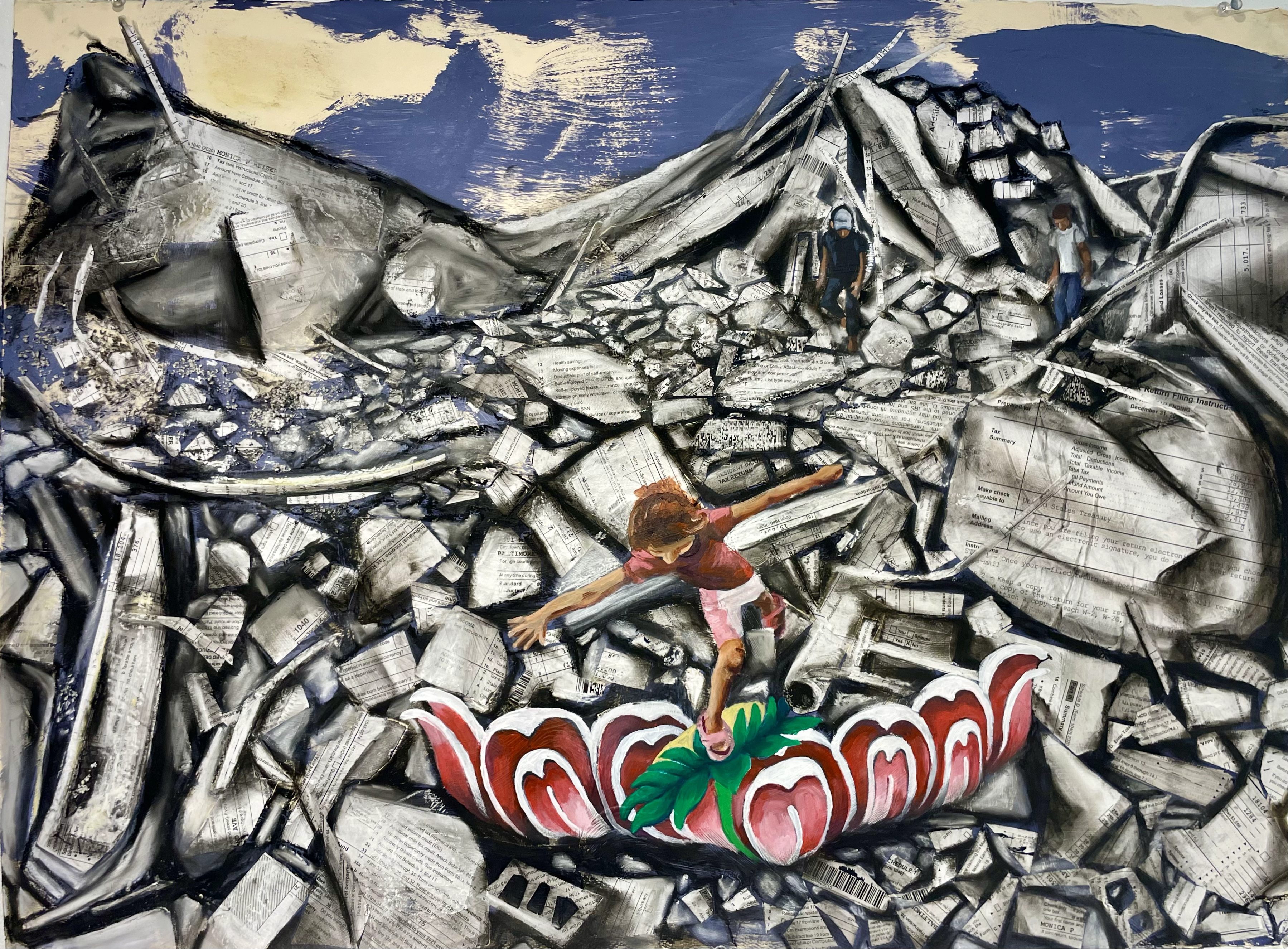
In continuing collage with Rubble (product of my taxes), I found an article explaining that clearing Gaza of rubble could yield 90,000 tonnes of planet-heating emissions. In the article, a Palestinian girl finds her way amid the rubble of a building hit in an Israeli strike in the Bureij refugee camp in the central Gaza Strip on July 10, 2025. The US military industrial complex is using my American tax dollars to destroy innocent people’s home, land, and lives, and is warming the planet now and in the future. The reference for this work is taken from this article. I considered what materials might communicate this relationship on symbolic and personal levels, and incorporated sand and my personal collaged tax returns.
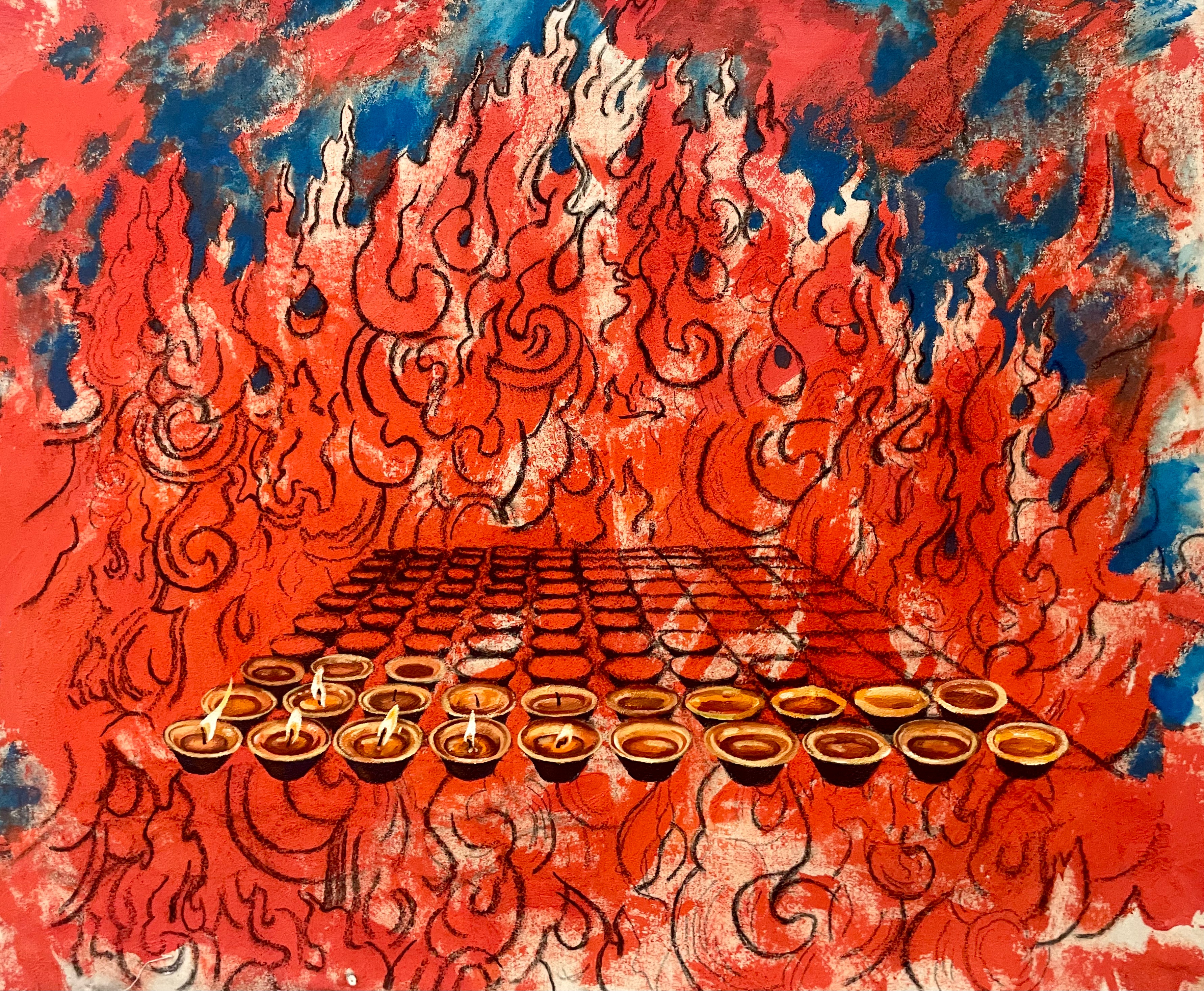
There is a dual meaning with the sand as it is both sacred in Tibetan sand mandalas and points to the ephemerality of the building blocks of physical systems. The work Sacred Rage was made at the start of the lunar new year – the year of the Fire Horse. Channeling the sacred energy of anger in the form of wrathful deities is a common visualization in Tantric Buddhism meant to transform and uproot delusion and its causes. In that image, I make offering to this intention while also recognizing that thousands of Palestinians have been murdered due to flames, weapons, and explosives, many of them made by the United States. I pushed the gesture of mark making on the canvas so that the brushstrokes respond to the edge of the canvas, working larger, faster, and playing with movement. I have continued to explore compositional ideas through digital and analog collage, further explore the physical processes of deconstructing, disrupting, or even destroying images.
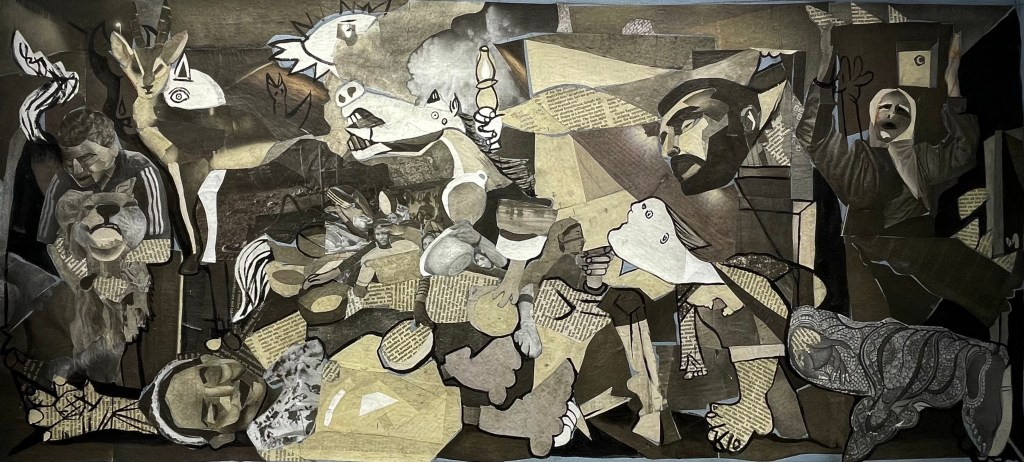
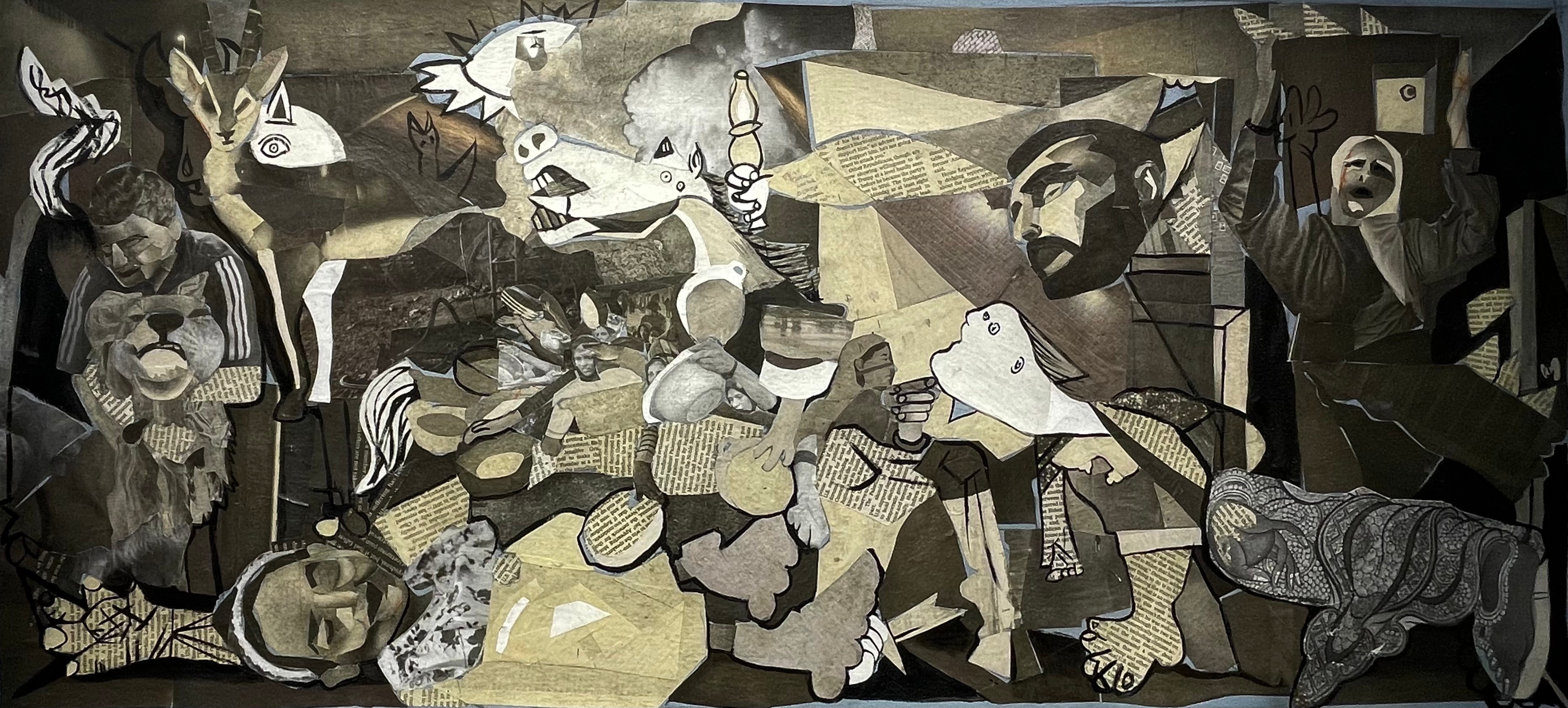
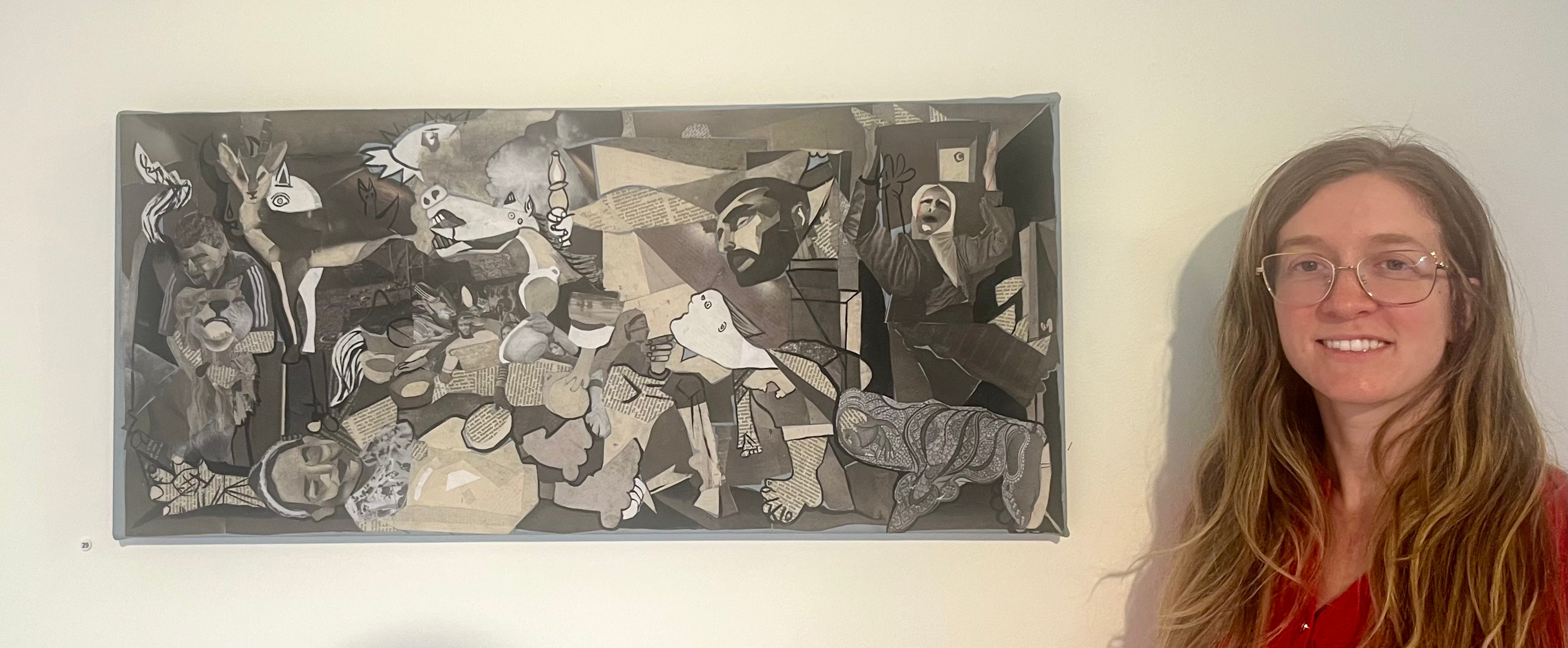
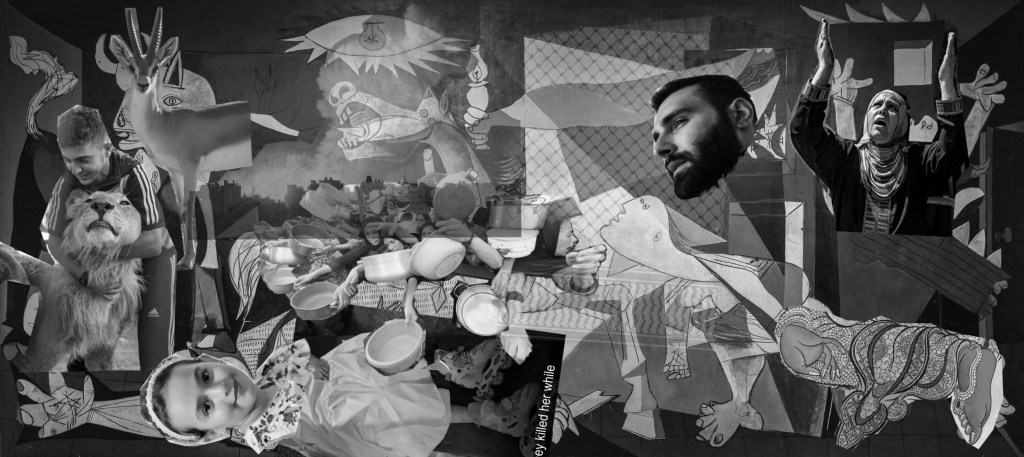
In the second half of the semester, the invitation to participate in the MFA Phantasms exhibition during the May 14th Bromo Arts Walk redirected my focus to completing the collage I began last semester, Gaza (After Guernica). The process of cutting and fitting newspaper shapes into the composition, almost like a puzzle, was both satisfying and challenging. The limited grayscale palette and disjointed arrangement communicate the violence we are witnessing. The contrast between the slow, tactile experience of reading a physical newspaper and the terrifying speed at which atrocities are committed, witnessed on smartphones, and scrolled past, informs both the material choice and the sense of motion in the composition. Positioning this work in dialogue with Picasso’s Guernica emphasizes the continuity of violence against civilians throughout history. The references embedded in this collage include Palestinian journalist, Motaz Aziza; 10-year-old Tala Hussam Abu Ajwa who was killed in early September 2024 by an Israeli airstrike in Gaza City while she was playing outside her home in her pink roller skates; images from the Israeli-made famine in Palestine, and more. Below is the digital collage I used as reference.
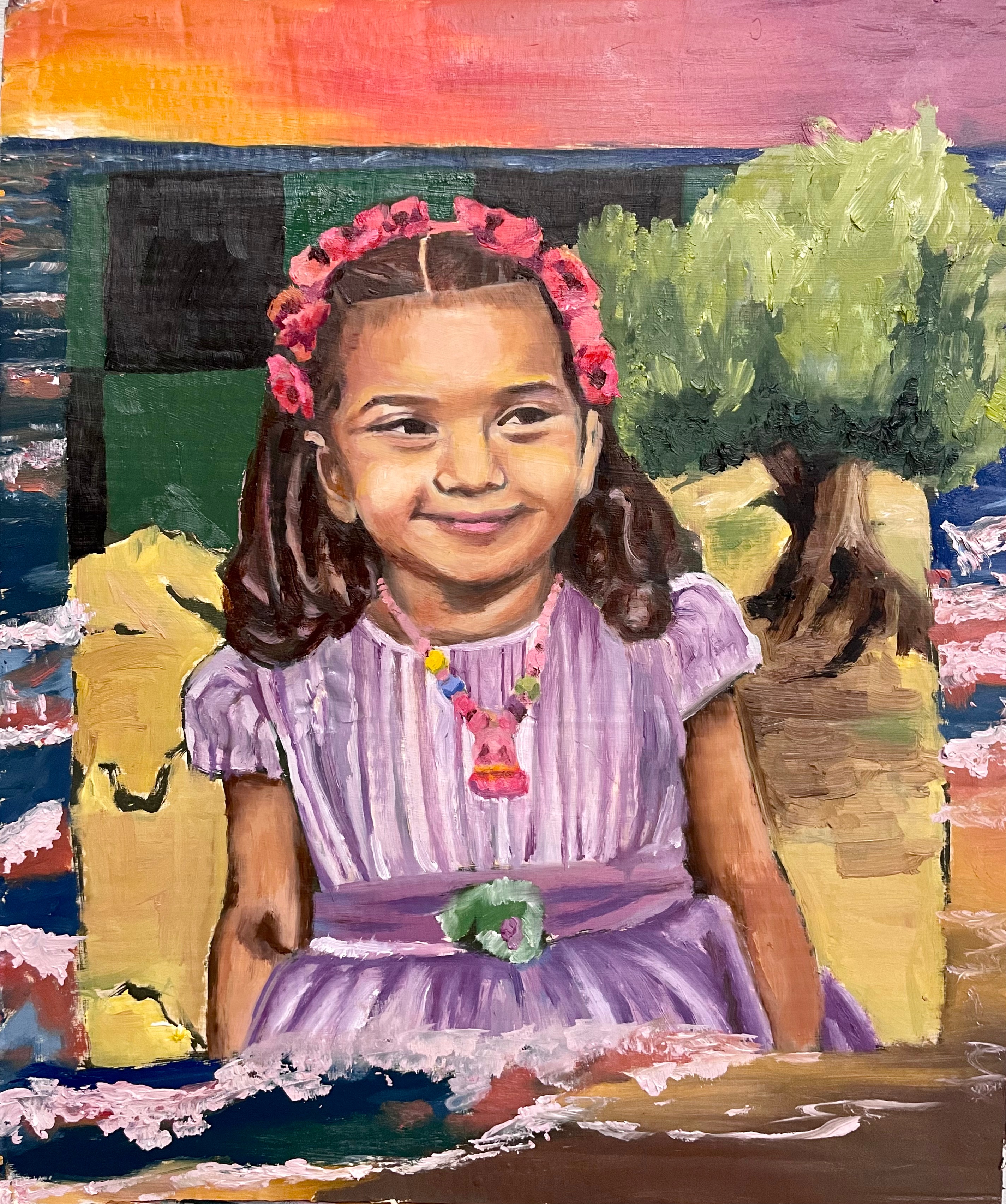
Portrait of Hind Rajab is the 2nd part of a diptych – the other half was made in Fall 2025. Six-year-old Hind Rajab was murdered, alongside her family, in a brutal act of genocidal violence by the Israeli Defense Forces. Hind survived the initial attack but was left trapped in the wreckage, surrounded by the dead bodies of her family members. Her cries for help, captured during a live call to emergency services, were broadcast worldwide. The inhumanity of this calculated act reverberated globally, showing Israel’s systematic and indiscriminate targeting of civilians in Gaza. In the diptych, my six year old portrait stands next to Hind’s, asking me to consider and challenge – why I was allowed to live but not her.
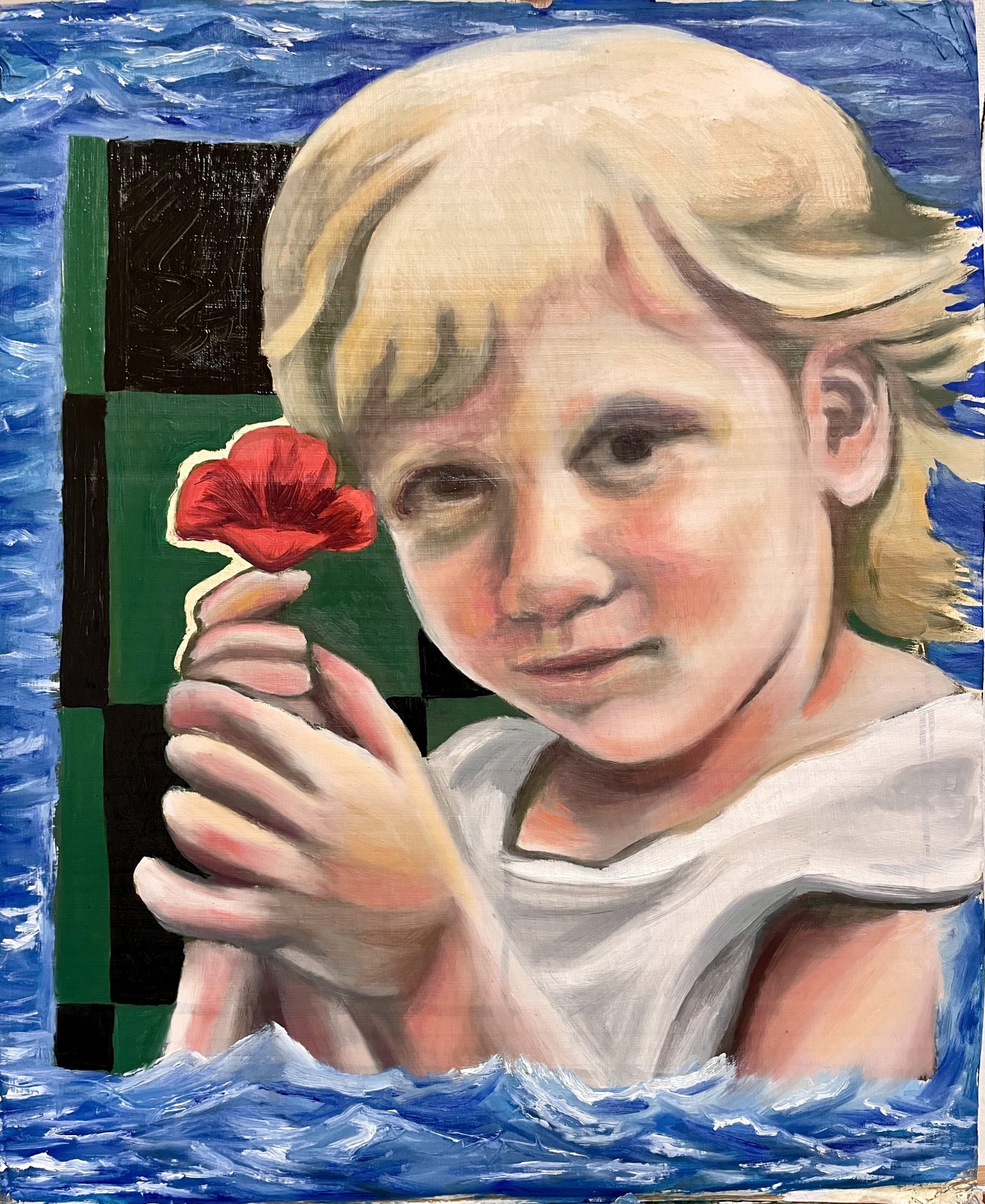
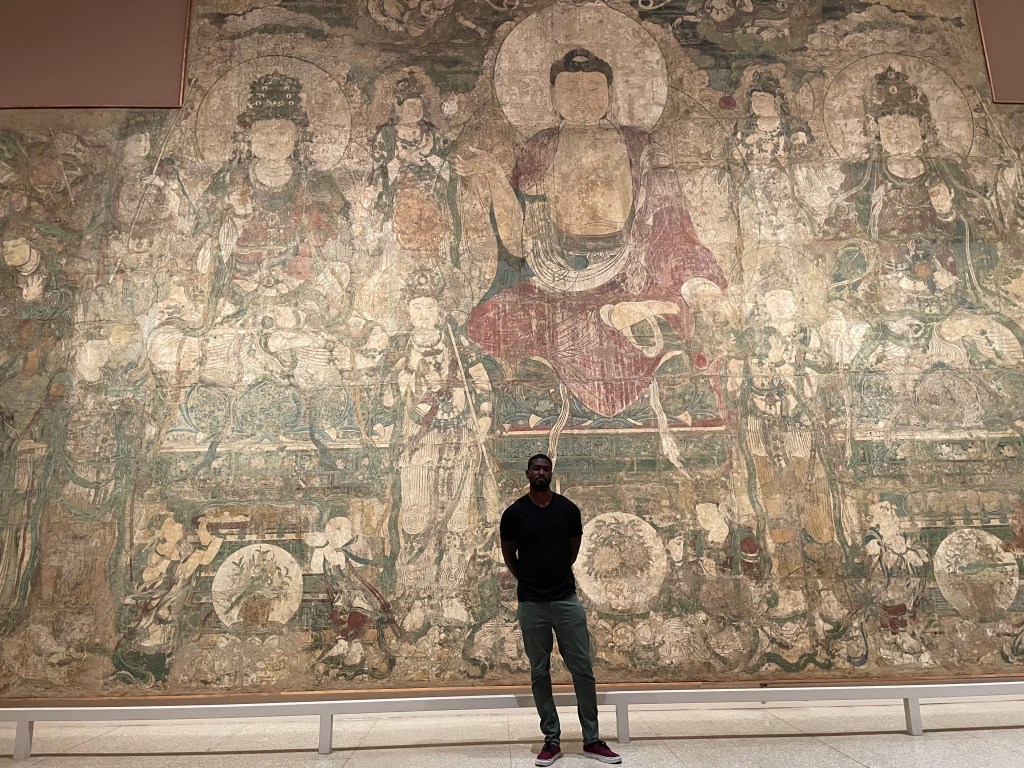
In all of the work I include Buddhist symbols – Green Tara’s right extended leg and hand, a lotus, light offerings, mandalas, sand, highlighting in my work that compassion and wisdom ask us to commit to the end of genocide and man-made suffering for personal and collective freedom.
In the future will I plan to work more deliberately with shape language to create legible landscapes and visual contrast between photographs, paint, and abstraction. Continuing the reclamation theme, I’ve salvaged books from The Book Thing in Baltimore—texts on international law, US constitutional law, and the historical foundations of the Israel-Palestine conflict—as source material for upcoming collages.
Thank you so much for taking the time to read and look through my work!